Usually, when we write about ministry commitments / teaching opportunities away from home, Mark is the one traveling and I am home. This time, our roles were reversed. I just returned from an exciting week of ministry in the town of Santos (in the state of São Paulo), where I was invited to teach a week long intensive ESL (English as a Second Language) course. This course was sponsored by the Litoral Baptist Theological Seminary, and open to their students as well as others in the community.
Litoral means coast; as you can see there is a beautiful coastal view in the port city of Santos. Yet the other two pictures show more of the urban reality. While considered a small city by Brazilian standards, this city of 434,000 people is home to the Baptist seminary that serves the entire area known as the Baixada Santista.
The Baixada Santista is a metropolitan area located on the coast of São Paulo state in Brazil, with a population of 1.7 million. Its most populous city is Santos. As an administrative division, it was created in 1996. It consists of 9 municipalities. https://en.wikipedia.org/wiki/Baixada_Santista
Many of the seminary students drive anywhere from 60 to 90 min, one way (depending on the traffic) after working all day, in order to attend three hours of classes in the evenings. Given the fact that the students would be arriving to class tired from a full days work and driving through stressful traffic conditions just to get there, I was faced with the dilemma of what I could actually teach them that would be of value in only 5 nights. The students were a mixed group, with the majority being true beginners, many with zero understanding of the English language, and a few who were intermediate level learners. Twenty-four students in all made this an interesting group to work with. Pr. Dilean Melo, the Rector of the seminary has a vision for offering masters level studies within the next few years (currently, they offer only bachelor’s level courses). With so many quality theological resources available at a low cost in English (many even free, in digital formats), the goal is to is to equip students with a course designed to meet their unique academic needs.
I have taught ESL as a ministry here in Brazil for over 20 years. One of my favorite resources was published by the the Home Mission Board of the Southern Baptist Convention (now known as NAMB) back in the late 1980s. This material uses the Gospel of Mark to systematically teach grammar, vocabulary, listening skills, writing, pronunciation and conversation while at the same time presenting a clear gospel message. Using this material as my basic text, and additional materials which I have compiled over the years, I planned for this 15 hour “language immersion” week. While I have taught this material over the course of many semesters in different locations in the past, I wasn’t sure how it would work to cram a lot of information into tired brains and bodies after a long hard day, 5 nights in row in a language not their own. I began to pray for God to show me what He wanted to be the end result of this “experiment”. Several weeks after I began praying about this opportunity the Lord impressed upon me to invite a young lady from my weekly Bible study group to assist me. Usually I teach this material alone, but I felt this would be a good opportunity to train someone else in this method. So, I invited Myland to join me for the week’s teaching.
Myland is from Indonesia and married to a Brazilian. I met her through the ministry of the International Congregation from the First Baptist Church of Curitiba. Shortly after moving to Brazil a year and half back, Myland and her husband André began attending our bi-lingual Bible study group that meets in our home. Myland has a passion for evangelism, a servant’s heart and I soon discovered, was a very creative teacher! She and I taught “tag-team” style that was so natural, it could only be attributed to God answering our prayers! It was as if we had been team teaching together for years!
As the week progressed and the students really began to show their hunger for learning the Lord impressed upon us that this one week was only the beginning of something even bigger than what we had initially imagined. The result: I will be returning to Santos one weekend a month, teaching 3 classes (1 on Friday and 2 on Saturday) to this group and one other pilot program for a small advanced-level class. In addition, I am developing the on-line component for the students to continue their study with me via distance education during the month. Our goal is that students will complete the basic course in the first year, the intermediate course in the second year, and by the third year, the students will be ready for a rigorous academic study focusing on reading and writing theological English.
I am thankful for this unique opportunity from the Litoral Baptist Theological Seminary. I am thankful to Southern Baptists for producing high quality materials. I am thankful for the students’ willingness to spend long hours studying English, in addition to their other seminary courses, full time jobs and family responsibilities. I am thankful that Myland was able to go with me and assist me. I am thankful that our husbands (André and Mark) were willing to let Myland and I leave them to fend for themselves for the week. And, I am thankful for Pr Dilean, his wife Vania and their lovely family who so graciously hosted us for the week, took care of all our expenses, and made the course affordable for the students. I’m looking forward to next month’s classes already.
I recently returned home from a two-week teaching trip in Brazil’s Northeast. In a real sense for me, this was getting back to my “missionary roots.” Before moving to Brazil’s south fourteen years ago, Caron and I spent eight years ministering in Minas Gerais. Minas Gerais is a Texas-sized state located in Brazil’s Southeastern region. Much of the state of Minas Gerias is economically and logistically linked to the states of São Paulo and Rio de Janeiro, the two states that make up the southern and southeastern borders of Minas Gerais. This region of Minas Gerais is a land of mountains, mining, and great coffee. It has cool winters and warm summers, and is lovely beyond words and was “home” to us for the early part of our ministry.
However, there is another part of Minas Gerais that is not the stuff of lovely post-card pictures. This other region has a beauty of its own, but it has a hard side as well. It can be hot, dry, and even survival is hard. This is Minas Gerais’ northeastern region known as the Valley of the Jequitinhonha. This is one of the poorest regions in Brazil and is the beginning of a vast semi-desert region known as the Sertão.
The Sertão stretches from northeastern Minas Gerais to the state of Ceará, where I was last week. It is a region whose rain patterns are directly affected by the Ocean currents popularly known as “El Niño” and “La Niña.” When ocean waters regularly warm in the Pacific, the “El Niño” effect, this directly impacts patterns of air circulation globally. Winds that would have come in from the Atlantic to bring rain to Brazil’s Sertão simply do not arrive. Hence, it is a region that experiences cyclical drought. As a result, farmers can lose an entire crop in any given year. If this occurs two years in a row, it can have disastrous consequences for those who live there.
I’d like to share with you the three things that God taught me while I was ministering in the Sertão recently:
Hard times need not necessarily make hard, harsh people.
As I have already said, Brazil’s Sertão is a hard region. It is not easy to live there. It is certainly not easy to farm there. It is not easy to stay there. The people who live in this region are tough and hardy. There is a saying among them that I will translate from Portuguese, “A Nordestino (Someone from the Sertão) is so tough that they can get milk to come out of a rock.” Dramatic rhetoric aside, it is true: The People of Brazil’s Northeast are tough and resilient. They have to be in order to live there.
Yet, they are kind souls. They are generous, warm and welcoming. A visitor to this region is greeted and received with the warmth extended to a long-time friend or family member. I could give you several examples. However, let me share with you an example that I still remember from our early days. Nearly 20 years ago I took my son, along with several other Brazilian Baptist friends, to the Valley of the Jequitinhonha. The weather was hot, the sun intense, and there was little or no water to be found. The suffering experienced by the people in that region was palpable. Yet, the warmth, generosity, and acceptance that I received remain lodged in my soul to this day. After several days staying with a family, the older matron of the family began to call my son, “o meu Galeginho” while simultaneously pinching his cheeks and kissing him. I could tell from the context that whatever it meant it was most likely good, but as a young missionary, I really wasn’t sure about the meaning. In my thickly accented Portuguese, I asked her, “What does that mean?” She responded saying, “You are a German (Portuguese = Alemão), i.e., a foreigner. He is a “Galego”, literally a Spaniard, i.e., a white person who is one of us.” Trust me, if there was anyone on the planet who did not look like one of them, it was my son, a tow-headed white-blond, fair-skinned boy, born in Kentucky. Yet, to her, he spoke Portuguese like one of them, so he was one of them. That gift of acceptance of my son as one of them is still a blessing that I treasure in my heart. It has kept me in Brazil. Accept my children and you accept me. Accept me, and it so much easier to stay.
This was a very poor family. There were holes in ceramic tile roof and you could look up at the stars while you slept at night on the floor. Yet, hard times did not make them bitter. Hard times made them better. On a different continent in a different day and time, my father was raised in the crushing poverty of the depression. Many times having meat for supper depended upon the sharp eyes of the shooter and his single .22 rifle shell. Thankfully, I never knew those types of hard circumstances first hand; my knowledge of those times came from my father’s stories. Yet, it was obvious that hard times did not make my father bitter. They made him grateful. He was a man whose life was characterized by a deep and abiding gratitude and joy. Whether it is a farmer living in Brazil’s Northeast today, an American being raised in the Great Depression, or any one of us today: Hard times need not make us bitter. By God’s grace, they can make us better. They can make us kinder, more compassionate, and more welcoming.
The green around the city is deceiving. In a few short weeks it will all be brown again.This abandoned house made of clay and small branches is just one more evidence of recurring drought in the region.
Spiritual challenges require apostolic passion and commitment.
Brazil is without question one of the world’s most religious countries. Brazil is a religiously diverse nation; the majority would identify with some form of Orthodox Catholicism or Protestantism. However, Brazil is also a country deeply imbued with many types of non-Christian religions and heterodox forms of Christianity. One particular form of unique religious expression is the veneration of Padre Cícero, which is particularly strong in Brazil’s Northeast.
Padre Cícero is locally recognized in this region as a “popular” saint. He is believed to have miraculous powers, but the Roman Catholic Church does not officially recognize him. His following in Brazil’s Northeast rivals that of Marian veneration of Nossa Senhora de Guadelupe in Mexico or Nossa Senhora da Aparecida at the Bacílica da Aparecida in the state of São Paulo, Brazil. What makes this movement of particular interest is that Padre Cícero was excommunicated from the Roman Catholic Church near the end of his life, although he was reinstated posthumously last year into good standing. It’s hard to know exactly what Padre Cícero actually taught and/or believed during his lifetime. Certainly, many orthodox Roman Catholics during his lifetime considered him heterodox to the point of meriting excommunication. However, there is no doubt many today in Brazil’s Northeast look to him as a principal source of spiritual power, comfort, and consolation in their daily lives and struggles. In the midst of this cultural reality, profound, deep apostolic passion and conviction is needed on the part of those who would minster the Gospel in this region.
When I use the word “apostolic”, I am not using it in the primary sense of apostolic authority. In my theological and confessional tradition, primary apostolic authority is limited only to those who gave actual eyewitness testimony to Christ’s life and resurrection. Rather, I use the term in its secondary sense as one who has been sent on the “apostolic” mission of making Christ and His Gospel among those who still have not heard. To that end, when I think of apostolic passion, I think of my friend of many years, Pastor Washington Oliveira. I recently spent a week with him, and I was impressed once again with the importance of apostolic passion for Gospel ministry.
Pastor Washington was born in Brazil’s Northeast and has lived almost twenty years in the Sertão. His body, mind, and spirit is focused on one holy calling, making Christ’s Gospel known among the people who live in this region. Every conversation with him always works its way to the question, “How can the Gospel advance in the Sertão?” Every decision made by his local church passes through the same filter, “How will this local church’s decision contribute to church planting and evangelism in the Sertão, Brazil, and the world?” Most importantly, his prayer life is directed toward on-going intercession seeking God’s gracious blessings for the people of the Sertão. While with him, the prayer I most often heard was, “Lord, send forth more workers into your harvest.” With this type of passion, it is understandable how his church has been able to plant 15 churches in a region where previously there had been no Baptist work at all.
Wherever God might have you deployed in His mission, there are principles that can be learned from a servant like Pastor Washington:
Longevity in a place of ministry often lays the foundation for success in ministry. Pastor Washington has given 19 years of his life to his region. When he speaks, he speaks with apostolic authority. His love, concern, and credibility are recognized. Longevity in a given location is no guarantee of inevitable success in ministry, but a lack of long-term presence and credibility is often linked to a lack of success in ministry.
Intentionality in public ministry priorities defines a ministry’s direction and inevitable results. Something in a person’s ministry will have first place in terms of time commitment, personal interest, emotional affection, and investment of resources. For success to be attained Great Commission advance has to be intentionally prioritized at every level: personally, ecclesiastically, and institutionally. There are many “good things” in which a person can invest time, efforts, and energies, all in the name of missions and ministries. Kingdom success comes to those who intentionally choose the best Great Commission advance from among the many “good things” of ministry.
Passionate personal piety focuses on mobilizing laborers for Gospel Harvest. One of the phrases, I heard Pastor Washington repeat on multiple occasions was, “I have wept and pleaded with God …” What has so grieved our hearts that leads us to say, “I have wept and plead with God?” There can be no greater cause to bring before the Father than the cause of the advance of the Gospel in the communities where we live, work, and minister. Perhaps the greatest need we can place before the Father is to send more laborers to advance His Kingdom’s work.
Hard places require a mobilized missionary presence.
There are many hard places in the world. Hardness may be due to political unrest, religious hostility, geographic isolation, or climactic challenges. Brazil’s Northeast is most widely known for its climactic challenges. No matter what the reason, hard places and spiritual “lostness” often go hand in hand. For the Gospel to reach these hard places, it requires God called servants to hear His call and say, “Yes, I will go.”
Those who go can and should be willing to do whatever is needed to advance the Gospel: things like evangelism, discipleship, social ministry, and training leadership. All of these ministries are needed in Brazil’s Northeast. In particular, I took part in a leadership training project via the catalyzing ministry of Reaching and Teaching, http://reachingandteaching.org in cooperation with the Brazilian Home Mission Board of the Brazilian Baptist Convention, a local Southern Baptist church, and the International Mission Board (IMB).
The IMB has a growing commitment to seeing limitless teams of Southern Baptists deploying to the nations. If you or your church are praying about your involvement in global missions, I would ask you to prayerfully consider Brazil’s Northeast. The needs are profound: spiritually, climatically, and economically. You and your church can make a real difference in the cause of Great Commission advance. One of the great needs is for more laborers in the Great Commission Harvest. There are many places in the world where we can and should go where God’s servants are not necessarily well received. That doesn’t reduce our missional responsibility to go there. Yet, the fact that you will be well received in Brazil’s northeast by warm and generous people, people who are open to a Gospel witness, does not detract from the fact that they too are lost without the hope of the Savior. In that sense, the spiritual reality of Brazil’s Northeast is not altogether different from other hard places. Yes, it does require some intentionality to get there. Yes, the climate can be challenging. However, if you or your church is looking for a first place to be involved in missionary ministry, I would commend this region to you. If interested, you can contact me or the International Mission Board for more details.
Let me conclude with these words translated from a popular evangelical song that expresses so well the message that I want to leave with you:
Whether in sandals or in flip-flops
Eating dust and dirt
On a donkey or a bicycle
Or on top of a truck
The feet of those who preach the Gospel how lovely they are.
It does matter what you drive
It doesn’t matter who is driving
The important thing is get there
And preach the Gospel
The feet of those who preach the Gospel how lovely they are.
In the Book of Acts
God gives the same orientation
Be my witnesses in any and every place
The feet of those who preach the Gospel how lovely they are.
Many of you have walked with Caron and me through the ministry challenges of 2015 and 2016. They have been times of clarifying our call and place in God’s global mission via the International Mission Board of the Southern Baptist Convention. As the challenges of 2015 begin to recede into the distance, opportunities for greater Great Commission engagement loom continually larger in the present and future. I am thrilled to see the International Mission Board positioning itself for on-going Great Commission impact worldwide.
Dr. M. David Sills, my friend and doctoral supervisor at the Southern Baptist Theological Seminary, winsomely summarizes the Great Commission mandates as “reaching and teaching.”
Reaching is that part of the Great Commission mandate in which God’s people intentionally advance the Gospel among those who have never heard the Gospel, once heard the Gospel, or have heard it, but still have not effectually believed it.
Teaching is that part of the Great Commission that intentionally seeks to help ground believers in the “faith once and for all delivered to the Saints.” This grounding is based on the Biblical teaching as understood by the historic Christian Church, has life application and worship at its center, and is guided at all levels by a commitment to Great Commission expansion.
By God’s grace, the Johnsons are blessed to give themselves wholeheartedly to the teaching component of the Great Commission. My (Mark’s) primary task is to strengthen theological education in the Americas. My “official” job title is “Theological Education Consultant”. The team with whom I work seeks to influence theological education throughout Mexico and Latin America. I would like to share with you what my team is doing in order that each of you can more effectively pray before the Father on our behalf.
The Theological Education Consultant Team works with local missionary teams and Baptist partners (churches, associations, and conventions) throughout the Americas to help them in the area of their theological education needs.
Note: When we use the term “Americas” (with an “s” at the end), we are referring to Mexico, Central America, Latin America and South America, but not the United States of America.
Six priorities of the Theological Education Consultant Team
Each Theological Education Consultant brings some form of academic preparation to their task of relating to seminaries throughout the Americas. Most importantly, each one brings a strong sense of calling to and passion for theological education as an important and strategic means by which a new generation of Great Commission servants is developed and sent to the Nations. To accomplish this, each Theological Education Consultant is encouraged to exercise their teaching ministry and gifting. In this way, strategic relationships with Americas Baptist seminary leadership and partners are nurtured and developed. For example, this year I will be teaching a full gambit of courses in the area of Missiology: Theology of Missions, Missions Anthropology, History of Missions, and Missions Strategies. Whenever I teach, and wherever I teach, I will be working with key strategic Baptist seminary partners to train more leaders for Great Commission advance.
Theological EducationConsultants work to develop a theological education network throughout Mexico, Central America, and South America. One recent and exciting example of this was a meeting coordinated by the International Mission Board in Panama. At this meeting, seminary leaders from the SBC met with Baptist seminary leaders from Mexico, Central America, and South America. This was an exciting opportunity to cast vision and strengthen cooperation.
Theological EducationConsultants connect the tremendous theological education resources of Southern Baptist Convention seminaries and partners to the theological education needs and opportunities that exist in Mexico, Central America, and South America. One Theological Education Consultant project of tremendous value was recently highlighted in an article in Baptist Press, http://www.bpnews.net/46562/from-the-seminaries-sebts-and-brazil-baptists-mbts-doctoral-ethics-degrees-9marks-at-sbts. Please read the whole article entitled, “Southeastern partnership with Brazilians sees first fruits”. My team was deeply involved in this entire process. Thankfully, similar theological education projects are being facilitated throughout the Americas. A quote from Dr. David Bledsoe sums up well what the Theological Education Consultants are doing across the Americas:
“This MTS endeavor has demonstrated Baptist cooperation at its highest level,” said David Bledsoe with the IMB in Brazil. “Southeastern offered the program and strived to do so in a contextual manner. IMB offered a missionary professor to assist in the coordination … [and] the Brazilian mission boards provided much of the logistic assistance to pull off the program on Brazilian soil.”
Each project’s details will be different, but the essential goal is the same: Baptist cooperation at its highest level.
The Theological EducationConsultants prioritize the development of Masters and Doctoral level training among Baptist seminary partners in Mexico, Central America, and South America. Theological education and leadership can and must take place at all levels. The Theological Education Consultants are deeply involved in broad based leadership training projects. However, many of the Consultants have terminal degrees (PhDs and D.Miss) that allow them to teach at the higher levels of theological and missiological education. It is an important priority for this team, the Baptist partners in Mexico, Central America, and South America have seminaries that are training and producing their own Masters and Doctoral level students who are prepared to teach and train in the future. Strategic partnerships exist or are being established with key Baptist partner seminaries throughout the Americas to help meet this very special need.
The Theological EducationConsultants help to facilitate the development and implementation of on-line theological education among Baptist partners in the Americas. This world is rapidly becoming a digital world, and the digital revolution is changing both how theological education content is being studied by students and how the content is delivered to them for their study. The Theological Education Consultants work with Americas Baptist seminary partners to help connect them to the technological resources of Southern Baptist Convention life in order to meet their growing needs for quality digital delivery of theological content.
Finally, Seminary Consultants help develop leaders within the International Mission Board (IMB). Theological Education Consultants work in conjunction with the field strategies set by the affinity leadership team as well as cooperatively as part of a local IMB engagement team. It is a pleasure and honor to work with and serve along side fellow Southern Baptists on mission to the nations and IMB colleagues who are forward deployed among the nations.
You now have an overview of what I am doing and how I am leading this team as we work together in theological education in an area that stretches from the Rio Grande River to the southernmost tip of South America. This work is possible because of the financial support of Southern Baptists to the Great Commission and the prayers of each you on behalf of God’s global mission. This work of theological education has God’s global glory as its primary focus and Baptist cooperation at the highest levels as the means by which this global mission is being accomplished.
If you are a theological educator with a terminal degree and are interested in a short term missionary teaching assignment, please contact me. I would love to share with you some exciting options. If you are a pastor or church leader with a heart for training, there is a place for you also in this work. We are committed to training leaders at all levels. I look forward to hearing from you. God bless you and thank you for being a part of this cooperative effort that makes this all possible.
Twenty three years ago Mark and I took our two preschoolers and twelve pieces of luggage along with our brand new passports and one way tickets and boarded a plane for the great unknown—our answer to God’s call to transplant our lives in Brazil. It was no April Fools’ prank. It was the real deal. It was exciting and terrifying all at the same time. We had no (as in ZERO) language skills, had no idea where we would be living and could not even correctly pronounce the name of the city of our first assignment.
We were appointed as Career Missionaries with Foreign Mission Board of the Southern Baptist Convention (now known as the International Mission Board, or IMB) in October of 1992. It took a couple of months for us to sort through, give away, sell, pack and crate our few worldly belongings, 8 weeks of orientation (as if anything could have prepared us for what we would actually face) and then several more months of waiting for visas before we actually arrived in country on April 2, 1993. And now here we are, twenty-three years later.
Much has changed, including our addresses (we are currently in our eighth place of residence), our official job descriptions, missionary colleagues have come and gone, our national partners have changed, just to name a few.
Muchremains the same, including our passion for evangelism and discipleship and our God given call to teach and equip workers for His harvest.
What have we learned so far?
God has made the world’s wisdom foolish. The Bible tells us this in the passage from 1 Corinthians 1:18-31. Note verses 18 and 20b.
God chooses to use what is foolish (in the eyes of the world) to bring Him glory. Note verses 26-31
1 Corinthians 1:18-31Holman Christian Standard Bible (HCSB)
Christ the Power and Wisdom of God
18 For the message of the cross is foolishness to those who are perishing, but it is God’s power to us who are being saved. 19 For it is written: I will destroy the wisdom of the wise,and I will set aside the understanding of the experts.20 Where is the philosopher? Where is the scholar? Where is the debater of this age? Hasn’t God made the world’s wisdom foolish? 21 For since, in God’s wisdom, the world did not know God through wisdom, God was pleased to save those who believe through the foolishness of the message preached. 22 For the Jews ask for signs and the Greeks seek wisdom, 23 but we preach Christ crucified, a stumbling block to the Jews and foolishness to the Gentiles. 24 Yet to those who are called, both Jews and Greeks, Christ is God’s power and God’s wisdom, 25 because God’s foolishness is wiser than human wisdom, and God’s weakness is stronger than human strength.
Boasting Only in the Lord
26 Brothers, consider your calling: Not many are wise from a human perspective,[not many powerful, not many of noble birth. 27 Instead, God has chosen what is foolish in the world to shame the wise, and God has chosen what is weak in the world to shame the strong. 28 God has chosen what is insignificant and despised in the world—what is viewed as nothing—to bring to nothing what is viewed as something, 29 so that no one can boast in His presence. 30 But it is from Him that you are in Christ Jesus, who became God-given wisdom for us—our righteousness, sanctification, and redemption, 31 in order that, as it is written: The one who boasts must boast in the Lord.
As we celebrate our “anniversary” of our leaving one home to make our home in another place, we remember these words from scripture. Maybe April Fool’s Day will be a reminder to you, as it is to us, that God is about something greater than we can imagine or envision.
Caron and I want to thank you all for praying for us. We return this week to Brazil to continue our ministry in that great mission. These past ten months in the United States have been challenging for us, and for many of our International Mission Board colleagues. We prayed and sought God’s will as to whether to accept the terms of the Voluntary Retirement Initiative being offered by our mission board, or to continue in our missionary ministry. There is no doubt that the Father desires us to return to Brazil and continue in His mission.
God has affirmed three truths in my heart that lead me into the future:
God’s mission calling for Mark and Caron Johnson has not changed.
A friend shared with me these words from Jeff Iorg, President of Golden Gate Baptist Theological Seminary. They have helped me as I navigated the challenges of the past year with respect to God’s will for my future:
“Your calling establishes parameters, giant brackets around your life, which informs your choices and directs the outcome of your life. A call can only be changed by a subsequent, superseding impression from God.[1]”
Previously, I wrote as to how God marvelously and providentially moved us to the missions field. Based on these words of Dr. Iorg, I can say He has not in any way clearly said His plans for us have changed. We go back confident of His leading because we know what continues to burn in our hearts, a passion for His missions among the nations.
Kentucky Baptists, and Southern Baptists are still deeply committed to Great Commission advance in the world through the IMB.
My time in Kentucky has reminded me that Southern Baptists love missions and are still committed to God’s mission to the nations. This has not changed. Spending years outside the United States, I am at times amazed at the rapid rate of social change taking place in my own nation. However, one thing has not changed: Southern Baptists still love missions. Many of you have communicated this to us personally. We return with that knowledge. Dr. Iorg reminds us, “God calls through the prompting of others. [2]” I have felt encouragement and support from Southern Baptists during these challenging times. Challenging times still await us in the future. Yet, I find strength to continue in the encouragement that I have received. Like Aragorn in the Battle of Helm’s Deep, described in J. R. R. Tolkien’s “The Two Towers”, he received encouragement to stay from his friends: “Your friends are with you, Aragorn.” Knowing you stand with us makes all the difference between staying and going. We go because we go with the confidence of God’s presence and the support of God’s people.
My (Mark’s) personal mission has not changed: My mission continues to be to train the next generation of Great Commission servants for Global Missions deployment.
After much prayer and soul searching, we reached we are confident of this: God would have us to continue in Brazil and the Americas until we have fulfilled our part in His mission.
After the soul-searching of 2015, I find Eric Liddell’s words in the movie, Chariots of Fire, to express my own deepest feelings: “I believe God made me for a purpose, but he also made me fast. And when I run I feel His pleasure.” I believe God has made each of us for a purpose. When we run the race He has set before us, we will feel His pleasure in what we do.
Yes, there will be tears when we return to Brazil this week. We cried when we thought of leaving Brazil; now, we cry some more thinking of leaving friends and family (especially 2 grandbabies!) in the USA. However, God has spoken to our hearts. God has called us. His churches support us. He has said, “Who will go for Us?” and we have said, “Here am I, send me.”
My passion is to see the biblical, Baptist, and missional theology of missionary pioneer Zachary Taylor embraced in every part of Brazilian Baptist life, and throughout the Americas. Working to this end is where I can make my greatest contribution to God’s mission in the Americas. Yet, this is not the ultimate vision. This (theological education and leadership training) is a means by which a greater vision can be attained.
I conclude with the words of Baptist missionary pioneer, William Buck Bagby a son of the great state of Texas whose parents came from Kentucky. Allow me first to quote him in the lovely Portuguese language:
“É o mais lindo panorama que os meus olhos jamais contemplaram. (…) Enquanto eu olho hoje à noite para o esplêndido panorama de luzes cintilando na superfície das águas, postadas ao lado das montanhas e se misturando com o brilho das estrelas, meu coração, se entristece por haver aqui milhares de pessoas que estão ‘sem Deus e sem esperança’, movimentando-se sob a triste sombra de um eclipse. Ó Deus, conceda que a tua verdade que está em Cristo Jesus encha esta terra, de Norte a Sul, do Atlântico aos Andes! ” — William Buck Bagby
“It (Brazil) is the loveliest panorama that my eyes have ever contemplated. While tonight as I look at the splendid panorama of lights reflecting on the water’s surface, placed by the side of mountains and mixed with the brilliance of the stars, my heart becomes saddened because in this great nation there are thousands and thousands “without God and without hope” walking as if under the dark cloud of a spiritual eclipse. Oh, God! Grant that your truth which is in Christ Jesus fill this land, from North to South, from the Atlantic to the Andes!”—William Buck Bagby.
Are we concerned? No more than normal. If God has called us, His churches support us, and our friends have not forgotten us, we are ready (to roughly paraphrase William Carey) “to go back down into the hole” because we know our family and friends, our churches, and our Southern Baptist family will continue to “hold the ropes”.
Yours for the Gospel and the Advance of the Great Commission,
Mark and Caron
[1] Iorg, J. (2013). Seasons of a leader’s life: learning, leading, and leaving a legacy. Nashville: B&H.
[2] Iorg, J. (2013). Seasons of a leader’s life: learning, leading, and leaving a legacy. Nashville: B&H.
In English we say a picture is worth a thousand words. In the Portuguese language, there is a word worth a thousand pictures. “SAUDADES.”
sau·da·de [souˈdädə] (noun) a feeling of longing, melancholy, or nostalgia that is supposedly characteristic of the Portuguese or Brazilian temperament.
SAUDADE
A word in Portuguese and Galician (from which it entered Spanish) that claims no direct translation in English. It describes a deep emotional state of nostalgic or profound melancholic longing for an absent something or someone that one loves. Moreover, it often carries a repressed knowledge that the object of longing might never return. https://en.wikipedia.org/wiki/Saudade
We are in the final countdown month of preparations for our return to missionary service in Brazil. Many of you have asked how you can pray for us. Mark and Caron will both be sharing some thoughts on this poignant subject of leaving the land and people we love to return to the land and people we love. Here is the first of a two part series. Caron shared s her reflections in Part 1 last week; Now, Mark shares his thoughts in Part 2.
Part 2 — Mark’s Thoughts
Hudson Taylor, at the end of a life full of suffering and trial, said, “I never made a sacrifice.”[1] In once sense, these words seem to be blatantly contradicted by the plain facts of Christian experience in general, and all forms of Christian missions service in particular. Hardships are endured on the part of God’s people when they are obedient to God’s mission, whether in sending or in going.
God’s mission has always gone forward on the “sacrifice” of God’s people. Minimally, that sacrifice consists of giving and sending. All Christians are called sacrificially to give of their financial resources for the advance of the Gospel. Some Christians individually will be called to give of their lives by actually deploying to other places and cultures in order to spread the Gospel.
However, at the same time, Christian missions is motivated by a deep sense of gratitude, gratitude for what God has done for humanity’s salvation in Christ Jesus. “Sacrifices” made in God’s mission pale in comparison to that which He has done on our behalf in order to procure for us salvation. Temporal “sacrifices” made in God’s mission pale in comparison to the eternal benefits that wait for us in God’s certain, coming Kingdom. His servants believe these truths, live for these truths, and willingly undergo personal hardships for the sake of these truths.
Is Christian missions a “sacrifice”?
In one sense, Hudson Taylor is right; deploying for the Great Commission is not a sacrifice. It is a privilege. No hardship experienced on our part equals the magnitude of the grace of God lavished upon us in Christ Jesus.
Yet, in another sense, the pain felt in Christian service is very real. The nature of missionary service is such that common human pain is often times amplified beyond normal experience by the additional challenges and stresses of trans-cultural living and cross-communication. As a result, the normal hardships of life, including the Christian life, are magnified in the rigors of transcultural living, ministry, and survival.
Missionaries deeply feel the pain of separation from kin and country that deploying for the Great Commission demands. This pain is real, and it can be very intense. This pain has been a constant companion in my missionary pilgrimage. For twenty-three years, I have lived with this reality of Great Commission obedience in my life, the pain of good-byes. Indeed, nothing has been more painful than the good-byes.
My first years of leaving family and friends to go to the mission field were accompanied by a deep sense of pain and loneliness. Initially, leaving family and friends, I would cry like a baby. Sometime ago, I quit crying. Not because the pain of separation grew less, but not even tears could bring healing to the heart. For some sorts of pain, the hurt runs too deep to be casually cured.
Medicine can mask the pain.
Counsel can ease the pain.
Diversion helps to momentarily forget the pain.
However, as an American, I always felt the deeply held cultural assumption that I had to get through pain, get over pain, and/or move on from pain in order to be whole. After all, “the pursuit of happiness” is a part of the political and cultural legacy of what it means to be American. It was at that point that Christian missions itself taught me how to deal with, live with, and ultimately embrace that which I felt most deeply in my heart. Allow me to share another story from the life of Hudson Taylor that illustrates this important life lesson. The following passage is from The Growth of a Soul, vol 1. Written by Howard and Geraldine Taylor, son and daughter-in-law of Hudson Taylor.
My beloved, now sainted mother had come over … to see me off. Never shall I forget that day, nor how she went with me into the cabin that was to be my home for nearly six long months. With a mother’s loving hand she smoothed the little bed. She sat by my side and joined in the last hymn we should sing together before parting, we knelt down and she prayed – the last mother’s prayer I was to hear before leaving for China. Then notice was given that we must separate, and we had to say good-bye, never expecting to meet on earth again.
For my sake she restrained her feelings as much as possible. We parted, and she went ashore giving me her blessing, I stood alone on deck, and she followed the ship as we moved toward the dock-gates, As we passed through the gates and the separation really commenced, never shall I forget the cry of anguish wrung from that mother’s heart. It went through me like a knife, I never knew so fully, until then, what ‘God so loved the world’ meant. And I am quite sure my precious mother learned more of the love of God for the perishing in that one hour than in all her life before.
Oh how it must grieve the heart of God when He sees His children indifferent to the needs of that wide world for which His beloved, His only Son suffered and died.
Hudson said: “I never knew so fully, until then, what ‘God so loved the world’ meant.” These key words from have helped me walk through the pain of separation from family and loved ones.
Simple though it may be, it came as a revelation to my spirit that it was “Ok” to be deeply grieved with saying good-bye.
How could it be anything else but terribly painful to leave those that we love? It was “Ok” to be saddened to leave behind aging parents for whom I longed to care, precious family for whom I longed to be near, and long-time friends with whom I desired to share life. It was not necessary for me to “get over and move beyond” anything that I felt, because the pain I felt was real.
Painful, sacrificial love is the essence of the very faith that God’s people have been sent to proclaim to the nations.
The pain of separation was part and parcel of Christ’s incarnation and ultimately His atoning work on our behalf.
Salvation cost the Father loss of fellowship with His Son as He became a propitiation, a sin offering on our behalf.
Salvation cost the Son communion with His Father, which He had enjoyed for all eternity, when He took unto Himself the wrath for which humanity’s sin deserved.
His cry of dereliction, abandonment, and separation was the price paid for sinner’s salvation.
It comes as no surprise that those who follow in the footsteps of the Savior must be willing as well to walk in the same way of suffering and separation as He walked. As we go to the nations, we go as messengers of a costly sacrificial love. It is no small wonder that we too must bear the marks in our spirits, and at times our bodies, of this same sacrificial love for others that is necessary to make Christ known among All Peoples in All Places.
Caron and I have known the pain of leaving fathers who have now gone on to be with Jesus, mothers who are now aging, precious family members whose relationships are treasured, and now two grandsons. All of these have been painful. Particularly, it is now leaving the two grandsons that brings with it a type of pain heretofore not experienced in my life. I deeply grieve leaving them, because I so deeply want to invest in them, to love them, to see them become the men God would have them to be.
Only one love motivates me to continue in what is indeed a painful mission, God’s eternal love for the lost.
He has lost sheep in All Places among All Peoples whom He desires to call to Himself. These come from every tribe, tongue, and nation. Embracing God’s love for lost souls and His costly mission to redeem them, I can embrace the pain of leaving and separation. I can embrace the pain of good-byes.
When the pain of the mission is embraced, the feeling left in the human heart is “saudades,” the genuine heart-longings that one feels for the people and places we most treasure. I can live with this pain because it is an integral part of a mission bigger than the pain that I feel. For the day will come when these words of Christ words will become true: “And if I go and prepare a place for you, I will come again, and receive you to myself; that where I am, there you may be also.” (John 14:3 NASB).
What will we feel when this Day finally comes to pass? In this life, we embrace the pain of Great Commission faithfulness and live with the sweet “saudades” that God’s Spirit leaves in the heart. The Day is coming when all hearts in Christ will find the eternal joy for which their hearts long. Words from J. R. R. Tolkien express the future for which all God’s saints yearn:
“Gandalf! I thought you were dead! But then I thought I was dead myself. Is everything sad going to come untrue? What’s happened to the world?”
“A great Shadow has departed,” said Gandalf, and then he laughed and the sound was like music, or like water in a parched land; and as he listened the thought came to Sam that he had not heard laughter, the pure sound of merriment, for days upon days without count.
For now, we embrace pain in God’s mission to the nations, but the day is coming when everything sad is going to come untrue.
It is for this we labor. It is for this we long. It is for this we eagerly await. What does it mean to have “saudades?” For me, it means making peace with my pain for sake of the Prince of Peace.
[1] Piper, J. (2002). Brothers, we are not professionals: a plea to pastors for radical ministry (p. 52). Nashville, TN: Broadman & Holman Publishers.
In English we say a picture is worth a thousand words. In the Portuguese language, there is a word worth a thousand pictures. “SAUDADES.”
sau·da·de [souˈdädə] (noun) a feeling of longing, melancholy, or nostalgia that is supposedly characteristic of the Portuguese or Brazilian temperament.
SAUDADE
A word in Portuguese and Galician (from which it entered Spanish) that claims no direct translation in English. It describes a deep emotional state of nostalgic or profound melancholic longing for an absent something or someone that one loves. Moreover, it often carries a repressed knowledge that the object of longing might never return. https://en.wikipedia.org/wiki/Saudade
We are in the final countdown month of preparations for our return to missionary service in Brazil. Many of you have asked how you can pray for us. Mark and Caron will both be sharing some thoughts on this poignant subject of leaving the land and people we love to return to the land and people we love. Here is the first of a two part series. Caron will share her reflections in Part 1; Mark will share his thoughts in Part 2.
Part 1 — Caron’s Reflections
As a mother, I well remember awaiting the birth of our second child and wondering how I could ever love another with the same kind of love I held for our firstborn. It took about .025 seconds for me to resolve that after his birth! I was amazed that my heart could make room for another to occupy the same level of intense love. Yet, that is exactly how I describe the situation I now find myself in.
I am a person who loves, feels at home at, and deeply misses when not present, two distinct countries, two different peoples, two different cultures. As we prepare to return to Brazil, people ask me, “Where do you consider home now?” My response: Both. And neither.
Allow me to explain: Neither, because I will always be an “outsider”.
In Brazil, I speak Portuguese, have Brazilian friends, observe Brazilian customs and holidays, but I am still American. I enjoy celebrating American holidays, making American recipes (especially desserts!) and my Portuguese has a distinct American accent, no matter how hard I try. I am an “accepted outsider”, but an outsider, nonetheless. I belong, but I am different.
In the USA I find that here too, I am a bit of an outsider. It is the land of my birth, the home of my ancestors for several generations now. Yet, I find that after living abroad for 23 years, I am a foreigner to many of the customs, slang expressions, jokes, references to TV shows, understanding certain processes (pumping gas, automated Rx refills, to name a few). I crave different foods. I enjoy hanging out with internationals. I speak English without a foreign accent, but it doesn’t take long for folks to realize that I’m just a bit different. Thankfully, here too family and friends receive me as an “accepted outsider”. I belong, but I am different.
Both, because I am “at home” both in Brazil and in the USA.
When in the USA, I embrace whole-heartedly the culture, the people, the seemingly unlimited variety of options of everything to purchase for a reasonable price. I spend every possible moment out in the backyard: gardening, grilling out, and sitting around the fire pit. I enjoy watching the squirrels play and the hearing the birds sing (things I don’t get to do from my 10th story apartment in Brazil.) Most of all I enjoy spending time with friends and family. I enjoy meeting friends for lunch or coffee. I enjoy Wednesday night suppers at church. I enjoy singing in the Christmas Cantata. I enjoy every moment I spend with my precious family. I cherish every diaper I changed, every bath given, every story read to my two grandsons and I cherish the special moments I have spent with their parents (our daughter and son-in-law). I cherish every road trip taken with our son, every song sung together and Trivial Pursuit game played (even though I never win). I value every hour spent in the waiting room of a doctors office with my mom, or trip to the grocery together; every visit with my mother-in-law around the dinner table at the assisted living residence. I find myself purposefully, intentionally, recording these memories (sights, sounds, smells, etc.) on the hard-drive of my brain so I can recall them at a later date and relive them. Yes, I’ll confess here, that is why I take so many pictures and post them at random times. I am reliving those special moments because I know that those moments will never return. Now, I am not saying that the same is not true for you, dear reader. But might I suggest that unless you think about the fact that you won’t have that opportunity again for a very long time (possibly never), you many not fully appreciate how precious it is to experience it now.
Saudade was once described as “the love that remains” after someone is gone. Saudade is the recollection of feelings, experiences, places or events that once brought excitement, pleasure, well-being, which now triggers the senses and makes one live again. It can be described as an emptiness, like someone (e.g., one’s children, parents, sibling, grandparents, friends, pets) or something (e.g., places, things one used to do in childhood, or other activities performed in the past) that should be there in a particular moment is missing, and the individual feels this absence. It brings sad and happy feelings all together, sadness for missing and happiness for having experienced the feeling. https://en.wikipedia.org/wiki/Saudade
Yes, the USA is my home. I love it here. I don’t want to leave. (There, I said it.)
Yet, I am ready to go “home” to Brazil. I miss my bed. I miss my kitchen. I miss my pictures. I miss my orchids. I miss my “stuff”. I miss my friends, bike rides, walks along the beaches, and churrascos (Brazilian cook outs). I don’t miss the urban traffic, but I do miss certain aspects of the city. Most of all, I miss what I do there.
I’m a teacher by trade. I have taught every age and every grade from preschool – high school at some point. I have taught English as a Second Language (ESL). I have taught cooking and sewing and needlework classes. I have taught in churches and in seminaries. God has used my abilities to teach to create within me a passion for discipleship. I love teaching new believers how to take their first steps in following Christ. I love helping folks understand the glorious mysteries of the Gospel. I get excited about explaining how the Bible is relevant to all of life to those friends who are “not-yet” believers. I am honored to have the privilege of teaching young couples what it is to have a marriage centered on Christ and to teach principles of godly parenting to first generation Christians. I am blessed beyond measure to practice hospitality and open our home for Bible studies and times of sweet fellowship. (Even when sometimes it feels like we are running a Bed and Breakfast!) I still teach, but at a much different level now. God has uniquely made me who I am (with my interests, talents and abilities) so that I can become who He wants me to be. I’m not saying that can only happen in Brazil. But I am saying that is where God has placed me.
In a word, it is the “call” of God that empowers me to say goodbye to the life I love here in the USA and go embrace the life He has enabled me to love in Brazil. Many of you know we were offered the opportunity to for an early retirement package from our mission sending agency (IMB). After much prayer and soul searching, we decided not to accept it. Many of our dear friends and missionary colleagues chose to accept it. They too did so after much soul searching and prayer. It is not an easy decision to stay on the field or to return to the USA. Those of you involved in ministry know that decisions of this nature are not defined by financial loss or gain, but rather the sense of “call” on one’s life at that particular moment. I grieve for the loss of dear missionary friends and colleagues. I will miss them. I will add them to the list of my “saudades”. I can say with confidence though, that at this point in time, our call to “go and make disciples” is still what it was 23 years ago. The Lord has not yet released us from that call in Brazil.
My story is unique, as is your story. It is a story that has unfolded under the providential care of the Heavenly Father. I came to faith in Christ as an 8-year-old growing up in a Southern Illinois coal town. I was baptized by immersion soon after and became a member of a local church. The next year, something happened that shaped and set the course for the rest of my life. I went to a mission camp. There I sat under the spell-binding teaching of Southern Baptist missionary legend, Dr. John Abernathy.
Dr. Abernathy was then on his final furlough before retiring to Hot Springs, Arkansas. He was a missionary is his sixties. I was a boy barely nine years of age. Dr. Abernathy served the later years of his missionary career in Korea, but his legacy was established during his time of service in China before the communist takeover. That week at missions camp, he told me stories of his life among the Chinese, his being shot by Japanese soldiers and being saved by Chinese Nationalist soldiers, and, most importantly, of his involvement in one of the great revivals of the 20th century, the Shantung Revival. As a child, I spent that week with him in rapt attention asking him questions and listening to his stories. He placed in my young heart a passion for the Great Commission. When my mother came to pick me up from the camp, he walked with me to the car, placed his hand on my head and said to her, “Mrs. Johnson, I believe this young boy might be called to Christian missions.” From that time forward, I never had any question about it. I was made by God to be involved in His mission to the nations. It was then I knew that I had a call from God.
Providentially, life went on. I entered the ministry, was married, and started a family. However, the call to missions was there, lying dormant below the surface of my life waiting for the chance to bloom and grow. That reaffirmation of my call came at 27 years of age, at about the time of the birth of my son. Stephen was born with some health challenges. Caron and I did all that we could to care for him and nurture him with our limited resources. However, to my disappointment, I was told by our denominational sending agency that we could not be appointed due to his health condition and our indebtedness paying his medical bills. I had given up all hope of serving in international missions. It seemed that the door had been irreversibly closed. Then, God in His gracious providence renewed my call and acted by His power. Two things happened in a short period of time: God said to go to the nations and my son’s health was restored.
One evening, Caron and I were visiting with Steve and Deanne in Hopkinsville, Kentucky. (Be sure to go back and read Part 1 of this Blog post, if you missed it last week.) As we were about to leave, Steve, knowing my love for reading, said: “Hey, I have a book, that I would like for you to read. It is about one of your Southern Baptist missionaries who served in China.” I thanked him for the book, took it home and began reading it. The book was titled, The Shantung Revival. To my surprise, on the inside cover was the handwriting Dr. John Abernathy. He wrote a personal note to the recipient of the book. (Who that original recipient was, and how it got from that person to my friend Steve, I will never know.) Not only that, but as I turned the pages, Dr. Abernathy’s notes were in the margins of the text. Literally, on every page, it was as if I were hearing his voice from my childhood speaking to me again. At the same time, I heard God speaking to me, telling me that His call had not changed. That book came to me at the time of my deepest despair by the hands of a friend. Why at that time? I have only one answer, God willed it. I told Caron that I did not know how, but I knew that God wanted us to be missionaries. To do that, she reminded me, we would need a miracle to heal our son, which is, in my opinion, precisely what happened next.
Our son, whose emergency C-section brought him into the world a couple weeks ahead of schedule, had been subject to allergies and lung infections from birth. He was subjected to a battery of tests and found to be allergic to host of things. Allergy therapy followed, but he was always dogged by the specter of pneumonia, of which he had recurring bouts. Slowly, we noticed improvements and two and half years later we decided to reestablish contact with our denominational mission agency. The doctor there remembered our case and requested an update on our son’s present health status. To my amazement, the doctor called us into his office and shared with us: “Mr. and Mrs. Johnson, your son seems to have marvelously recovered. It appears that he will no longer need on-going allergy therapy.” Believing all things are under God’s control, I have no doubt that my son’s treatment and healing was superintended by the gracious providence of God Almighty.
God has taught me the following lessons from my experience, and I would suggest that they are applicable to your life as well:
God has a plan for your life. He really does. You are not here on accident. That plan might or might not involve you moving to another country. However, it will involve your glorifying God wherever you are in whatever circumstances you are. For now, you are where you need to be. Learn the lessons that He has for you where you are. “Don’t get discouraged if the task or ‘call’ does not come immediately. Remain faithful in what He has told you to do, no matter how small or seemingly insignificant it may appear.[1]”
Put yourself in places where can God can speak to you. For me, it was at a missions camp. For you, it might be at a local church, a special conference, etc. However, don’t think it is only a special few that have providential encounters with God Almighty. God speaks to us all. It is incumbent upon us to learn to clearly hear the voice of the Good Shepherd. Be involved in missions though your local church. God speaks most clearly when we are engaged in His work.
You have not been abandoned; you are not an orphan. No one has helped me more in this area than Jack Miller. Miller uses the helpful check list in order to help to assess our hearts:
“If you’re a Christian, you’ve been adopted. God is your Father. You have all the benefits of sonship. You are now a son or daughter of God” http://www.justinbuzzard.net/2009/12/21/orphans-vs-children-checklis/. If this is the case, and it is if I am a Christian, I can never give into despair. I am not an orphan alone in this vast Universe. I am an adopted child of the Great King of the Universe and He will accomplish His purposes in my life.
God has a purpose for your life and He is working to accomplish it. If the Father has spoken to you in the past and you are still waiting for Him to fulfill His Word in the present, do not lose heart. The purposes of the Lord will stand. His providential purposes are sure and He is always right on time, His time. Dr. Henry Blackaby in his book, Experiencing God, quotes Charles Spurgeon: “When we cannot trace God’s hand, we must simply trust His heart.”
A happy and blessed New Year to all!
Mark & Caron
[1] Duke, R. D. (2010). God’s Enabling Grace in the Path of Suffering. The Founders Journal: Suffering and Glory, Spring, (80), 25.
The year 2015 ended with the special pleasure of having a visit in our home with long-time friends, Steve and Deanne Turley. Steve and Deanne are veteran Assemblies of God missionaries who have served in Belgium for many years. The time together with them reminded me of everything special about Christian friendships that the years cannot dim: free-flowing conversations that are serious and substantive. Conversations that are honest, yet full of confidence in God’s providential mercies. These providential mercies have been made evident in years past and will certainly continue to be made evident in the upcoming years, including the year of 2016. Time with Steve and Deanne reminded me of the special place this couple has had in our lives and how God providentially used them to send us to Brazil 23 years ago. The same providence that has been at work in my life is at work in your life as well. Each of have a mission to accomplish. This post is my attempt to assure you that, “He who began a good work in you will complete it.” How? I cannot say. Will He? Of this, I am certain. My own story is a testimony to His faithfulness. Before telling my story, let me define briefly two important concepts, mission and providence.
Providence. God’s providence is defined by the Westminster Divines in the following way: “God’s works of providence are, his most holy, (Ps. 145:17) wise, (Ps. 104:24, Isa. 28:29) and powerful preserving, (Heb. 1:3) and governing all his creatures, and all their actions. (Ps. 103:19, Matt. 10:29–31)[1]” Simply stated, providence is the teaching that God has all things under His control, including the details of my life, for good and for ill. Because it is God who is control, I can be sure of three things:
I can trust God’s providence because He is all powerful. The God who made the vastness of the universe can and does control the sometimes seemingly chaotic details of my life and your life.
I can trust God’s providence because He is all wise. I think that I have an idea as to how the universe should be best governed, but the fact is that I am woefully limited by my finite sinfulness. God knows no such limits. He really does know what is best for me and this vast universe that He created.
I can trust God’s providence because He loves me. Jesus said that He would not leave us as orphans. We are His and He is ours. In all things, we have the confidence that He will never leave us or forsake us.
Mission. What is mission? There are a host of understandings of what this simple word means. Those understandings range from the simple idea of being sent to do a task to the possible actions and activities that might characterize and compose that task. However, for the purpose of this blog post, I am using a simpler understanding of the term, a definition of that comes from the world of leadership training. Your mission is what you should be doing, what you should be doing in every area of your life.
The word mission is derived from the Latin word, “missio” to be sent. This in turn begs the question: Sent to do what? What should I be doing? Answer that question and you know the mission for your life in every area of your life. Speaking from the perspective of Christian ministry, Aubrey Malphurs gives this helpful definition: “A mission is a broad, brief biblical statement of what the ministry is supposed to be doing.”[2]
Substitute the words family, person, company, organization, etc. for the word ministry, and it will make no difference. The operative word is “should.” Your mission, before God, is what you should be doing in your life and with your life.
This inevitably leads to a couple of basic questions: “How I can know what is my mission?” “How can I remain faithful to that mission once that I know it?”
I will address the question of how you can know your mission in a separate post. But for now, I assume that you already know what your life mission is but you are facing barriers that seem insurmountable in seeing that mission accomplished and become a reality. This was the case in my life when God used Steve and Deanne to rekindle my call to missions. I will share more about that chapter in our pilgrimage to missions in the next blog post. Be sure to check back next week for Part 2 of God’s Providence and Your Mission
[1]The Westminster shorter catechism: with Scripture proofs. (1996). (3rd edition.). Oak Harbor, WA: Logos Research Systems, Inc.
[2] Malphurs, A. (1998). Developing a dynamic mission for your ministry (p. 33). Grand Rapids, MI: Kregel Publications.
In part one of this article we looked at three points of concern about the celebration of Christmas, the conclusion many leading Anglo-Saxon Protestants reached about Christmas observance, and some application questions based on those well justified concerns. Now let take it a step further.
If the concerns about Christmas are as grave as those mentioned, why should it continue to be practiced by convictional evangelicals today?
I believe the answer is a question of Great Commission concern. Christmas is an example of missiological concern and historical contextualization. First, let’s briefly define contextualization.
Contextualization is defined by Dr. M. David Sills as:
…the process of proclaiming the gospel and living as the church in a modern cultural context.[1] … No one today lives in a first-century Palestinian cultural context, so every modern Christian contextualizes the gospel and the church in a cultural setting fundamentally different from the world of the Bible. However, most people don’t realize they are doing it.[2]
Contextualization is the process by which the Gospel is proclaimed and assimilated in cultures different from the biblical culture, and often times vastly different from the culture of the one sharing the Gospel message. This happens with greater frequency than is often recognized.
Musical preferences are usually the easiest way to see contextualization at work in most ministry settings. For example, some would argue that within their cultural reality, Southern Gospel is the best way to musically express Gospel truths. Others put forward the case that within their context, Contemporary Christian forms of music are better. Which musical option is correct, Southern Gospel or Contemporary Christian? If fact, both of these may be right and/or both be wrong. At this point, the cultural context determines what is the best strategic approach to be used. Some ministry contexts may favor large scale Christmas cantatas during the Christmas season. Other contexts may not favor Christmas cantatas at all, but rather multiple Christmas Eve services using classical music in order to reach their communities. In each case, musical style is a servant to the greater cause of relevant, comprehensible Gospel communication. The point to remember is that contextualization is always happening, whether we realize it or not. As it is always happening, it can be said that it has always been happening, which helps us better to understand the missiological origins of Christmas.
Before the conversion of the Angels and Saxons in what is now modern England, there was some religious observation of the birth of Christ in the Roman world. However, it was not tremendously emphasized in the ancient Church. Clearly, the focus was on Resurrection Sunday, which is now called Easter. Dan Groves gives this helpful summary:
Dionysus Exiguus, a sixth century monk, who was the first to date all of history from December 25th, the year of our Lord 1. Other traditions gave dates as early as mid-November or as late as March. How did Christmas come to be celebrated on December 25th? Cultures around the Mediterranean and across Europe observed feasts on or around December 25th, marking the winter solstice. The Jews had a festival of lights. Germans had a yule festival. Celtic legends connected the solstice with Balder, the Scandinavian sun god who was struck down by a mistletoe arrow. At the pagan festival of Saturnalia, Romans feasted and gave gifts to the poor. Drinking was closely connected with these pagan feasts. At some point, a Christian bishop may have adopted the day to keep his people from indulging in the old pagan festival, http://www.christianity.com/church/church-history/timeline/301-600/the-1st-recorded-celebration-of-christmas-11629658.html?fb_action_ids=10153099175722364&fb_action_types=og.likes
It needs to be remembered that these first historical observances of Christmas were within the bounds of the Roman Empire among Latin speakers disposed to accept the Roman worldview. What about those from beyond the pale of the Roman empire? What about the Barbarians?
The first major group of Barbarians to convert to the Christian faith were the Angels and Saxons, the Anglo-Saxons. Their conversion occurred roughly around A.D. 596, or about 10 to 15 years prior to the founding of Islam in 610. Upon their conversion, the missionary to the Angels and Saxons, Augustine of Canterbury, was faced with a simple, but profound question: Now, what? This people had converted, but had no previous background or exposure to the Christian worldview or to the Christian faith. Augustine of Canterbury wrote to Pope Gregory seeking orientation. Gregory’s advice explains why and how Christmas, and other aspects of Christian tradition, developed among these newly converted non-Latin/non-Roman peoples. Gregory responded to Augustine with these words:
The heathen temples of these people need not be destroyed, only the idols which are to be found in them.… If the temples are well built, it is a good idea to detach them for the worship of the true God.… And since the people are accustomed, when they assemble for sacrifice, to kill many oxen in sacrifice to the devils, it seems reasonable to appoint a festival for the people by way of exchange.[3]
Missiologists, like Johan Bavinck, describe this attempt to connect deeply with a given culture with no previous association to the Biblical message as possessio, literally “take possession of”. Gregory oriented Augustine to use and preserve pagan festivals and places already familiar to the Angels and Saxons and re-invest them with Christian meaning in order that the Gospel message might naturally take root in a culture that had no previous biblical tradition or awareness. For this reason, a previous pagan holiday, December 25th, became servant to a greater Master, the Gospel of Jesus. In this way, newly converted persons could understand the Gospel within their own cultural context. Christmas was established as a holiday to teach people within their cultural reality the most profound of truths: Christ’s incarnation and the importance of it.
That leads us to the next question:
Can a Christian partake in Christmas with a clear conscience?
I believe they can with this caveat: they must be keenly aware of who is converting whom.
Christmas exists for Christians to teach others, including their families, the importance of the incarnation and its implications for each person. If this occurs, Christmas fulfills its original missionary purpose. Christmas is well kept. If it does not occur and Christians find themselves drifting slowly in the direction of banal, secular consumerism, there is good reason to question if the holiday is fulfilling its original intended purpose, “to detach them for the purpose of the true God”. If a Christians finds their observance of Christmas taking them further from Christ and the Gospel (not closer), they should consider the need to re-calibrate their spiritual lives.
How can one best celebrate the Christmas season?
Here are our suggestions:
Remember what Christmas is about. It is not primarily about children, family, or the exchanging of gifts with those we love. These things are not bad; however, that’s not what Christmas is really all about. Christmas is about the celebration of the Incarnation. Anything that detracts from that is a distraction, not a helpful addition.
Can Christians cultivate the imaginary aspects of Christmas without deeply compromising the actual intent of the Christian holiday? Certainly, the Dutch Christian experience of Sinter Klaas shows that it can be done. The playful, whimsical element of Christmas need not be denied, and can be enjoyed by all, but should be held in reasonable check. When Santa looms large and the incarnation looms small, you already know the Christmas celebration has become unbalanced.
Maintain the giving of gifts within the limits of good Christian stewardship. Simply stated, incurring indebtedness purchasing Christmas gifts is always a bad idea. Set a budget and stay within it. You might enjoy focusing more on giving gifts that are simple, but reflect creativity and genuine artistry: sewing, baking, wordworking, painting, etc. Perhaps, some might want to give the gift of time and labor in helping with special projects. There are some gifts that money can’t buy. Never forget the gift of a good song after a special Christmas meal.
Invest in the life of your local church during the Christmas season. Make sure your local church gets time, effort, and energy that is needed during this busy time of year. Few things are more tragic than Christians so busy with secular Christmas activities they neglect supporting the celebration of Christmas in their local church. Rather than being a part of the on-going cultural discussion about the War on Christmas, exercise your First Amendment right and celebrate Christmas heartily and fully where you can do it with the full blessing of God and man, in your local church. Local churches, no matter how they choose to celebrate Christmas, need the presence, participation, and support of God’s people.
Remember the lost at home and abroad during the Christmas season. Hymn writer Keith Getty recently said as the culture becomes more secular the importance of Christmas as an outreach event in the local church becomes incrementally more important. He is right. Invite your lost friends to participate in the Christmas celebrations in your church.
Finally, as you give and exchange gifts, never forget the greatest gift was the gift of God’s Son. As you give to the Lottie Moon Christmas Offering, your gift helps others in different cultures to come to know the grace and hope that only exists in Christ’s Gospel. The work of Christian missions is tasked with sharing the Christmas message among all peoples: Roughly paraphrasing John Calvin, “The Son of God became the Son of Man in order that the sinful Sons of Men might become the glorious redeemed Sons of God.”
Is it really too hard to observe Christmas in this day with the same simplicity Christians have done in centuries past?
No, I don’t believe that is the case. Ask a good question and give a good answer, and the true meaning of Christmas can be kept in its rightful place. I conclude with lines from two of the greatest Christian philosophers, Charlie Brown and Linus:
Charlie Brown: I guess you were right, Linus. I shouldn’t have picked this little tree. Everything I do turns into a disaster. I guess I really don’t know what Christmas is all about.
[shouting in desperation]
Charlie Brown: Isn’t there anyone who knows what Christmas is all about?
Linus Van Pelt: Sure, Charlie Brown, I can tell you what Christmas is all about.
Linus Van Pelt: “And there were in the same country shepherds abiding in the field, keeping watch over their flock by night. And lo, the angel of the Lord came upon them, and the glory of the Lord shone round about them: and they were sore afraid. And the angel said unto them, ‘Fear not:”
[Linus drops his security blanket on purpose]
Linus Van Pelt: “for behold, I bring unto you good tidings of great joy, which shall be to all people. For unto you is born this day in the City of David a Savior, which is Christ the Lord. And this shall be a sign unto you; Ye shall find the babe wrapped in swaddling clothes, lying in a manger.’ And suddenly there was with the angel a multitude of the heavenly host, praising God, and saying, ‘Glory to God in the highest, and on earth peace, good will toward men.'”
[Luke 2:8-14 KJV]
Linus Van Pelt: [Linus picks up his blanket and walks back towards Charlie Brown] That’s what Christmas is all about, Charlie Brown.
A very Merry Christmas to all from the Johnsons.
[1] Pratt, Z., Walters, J., & Sills, M. D. (2014). Introduction to global missions. Nashville: B&H. [2] Pratt, Z., Walters, J., & Sills, M. D. (2014). Introduction to global missions. Nashville: B&H.[3] Terry, J. M. (1994). Evangelism: a concise history (p. 49). Nashville, TN: Broadman & Holman.

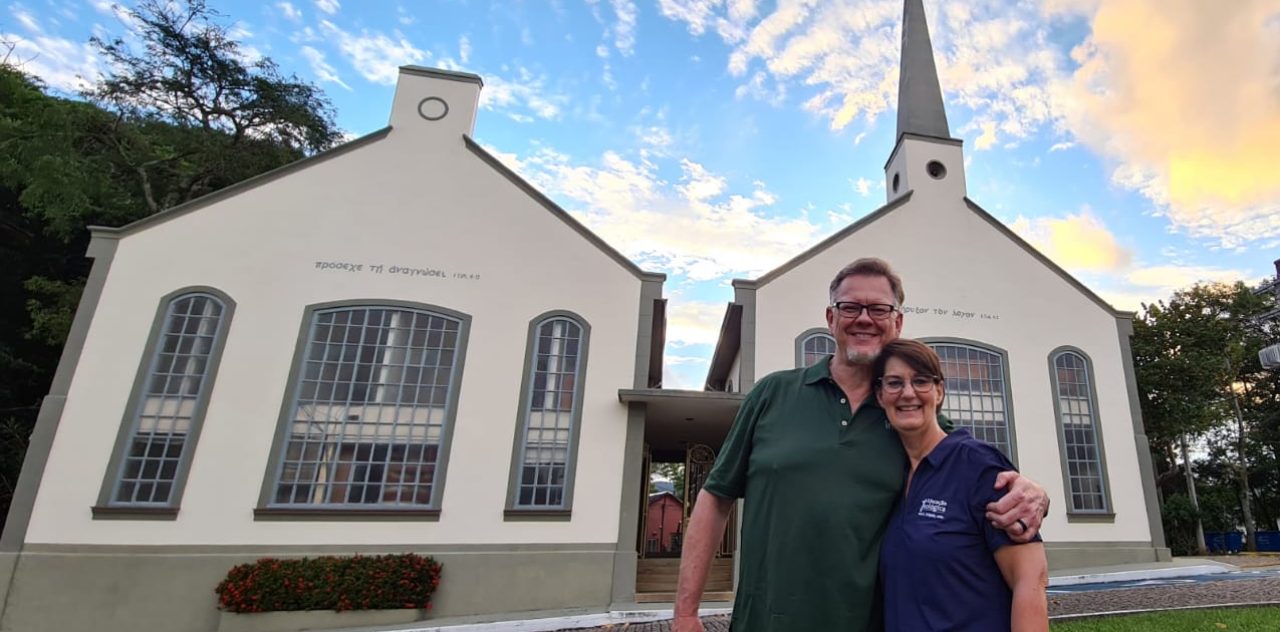



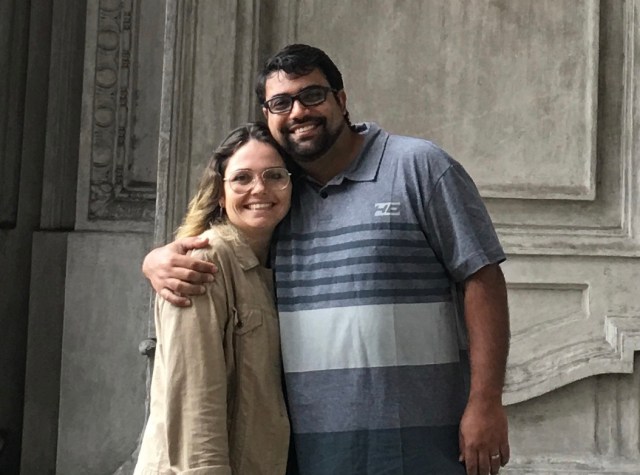
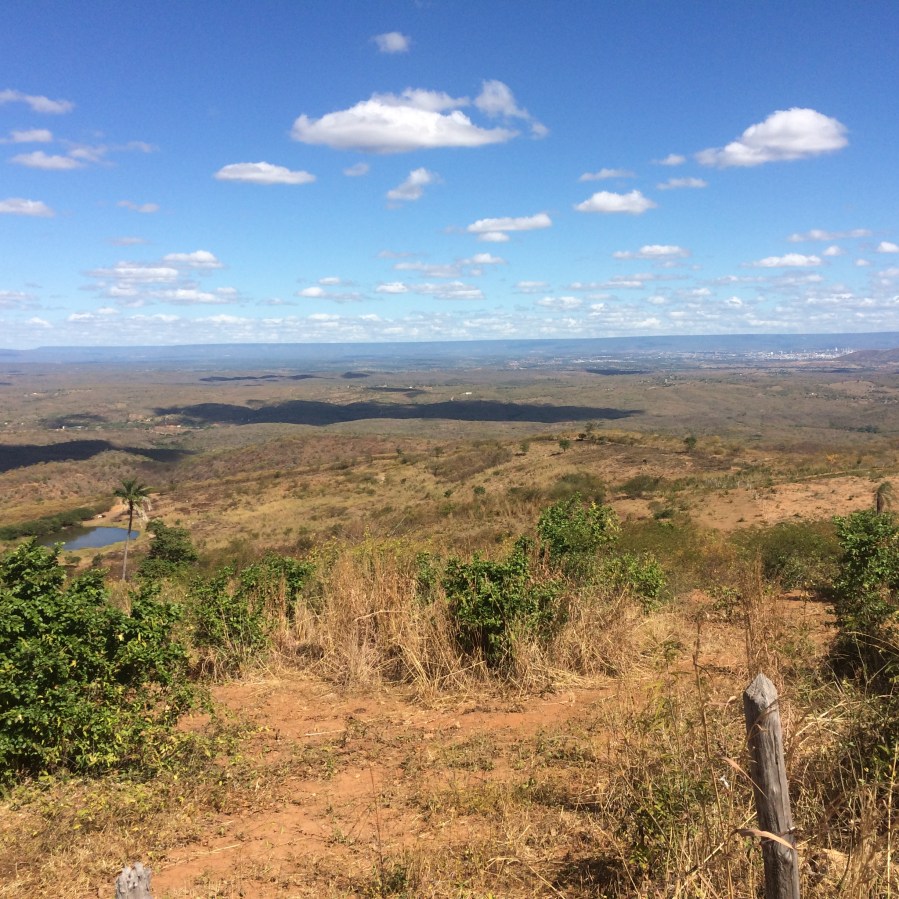


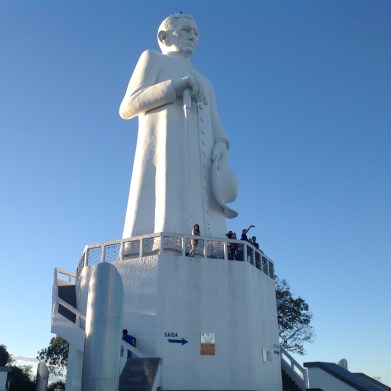
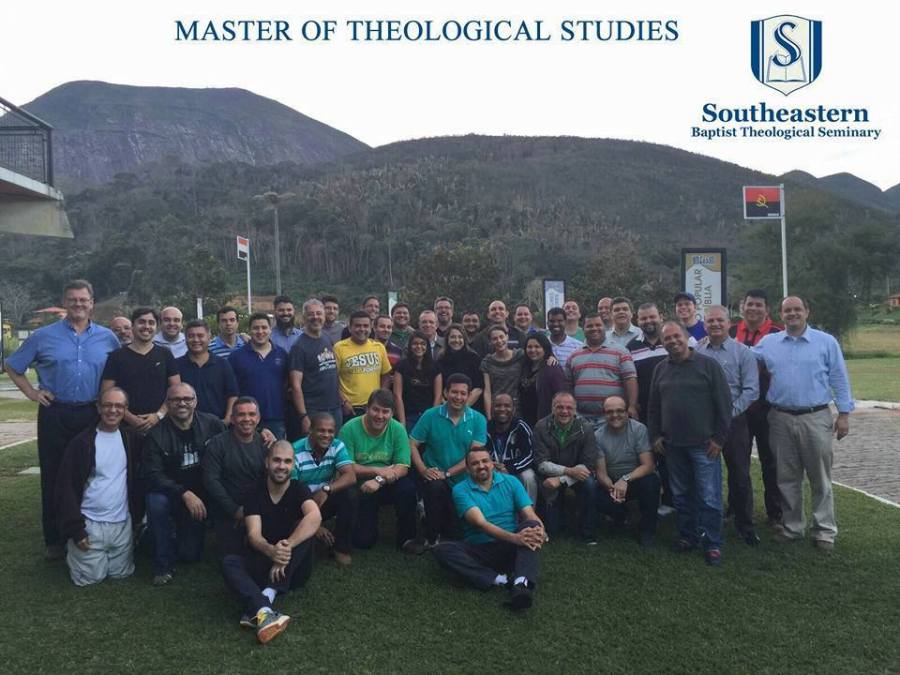
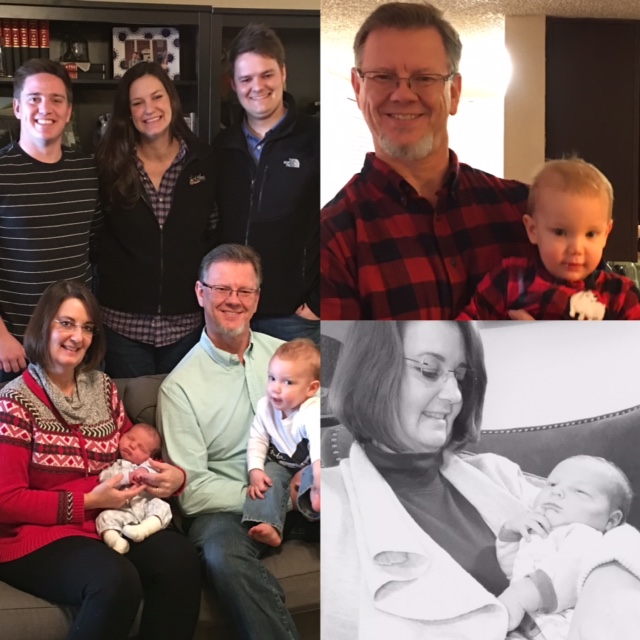

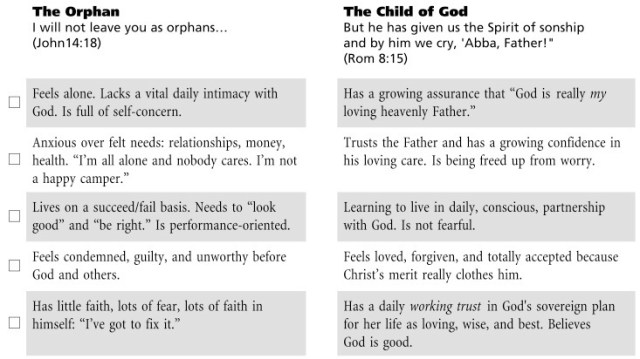

 Teaching Truth--Transforming Lives