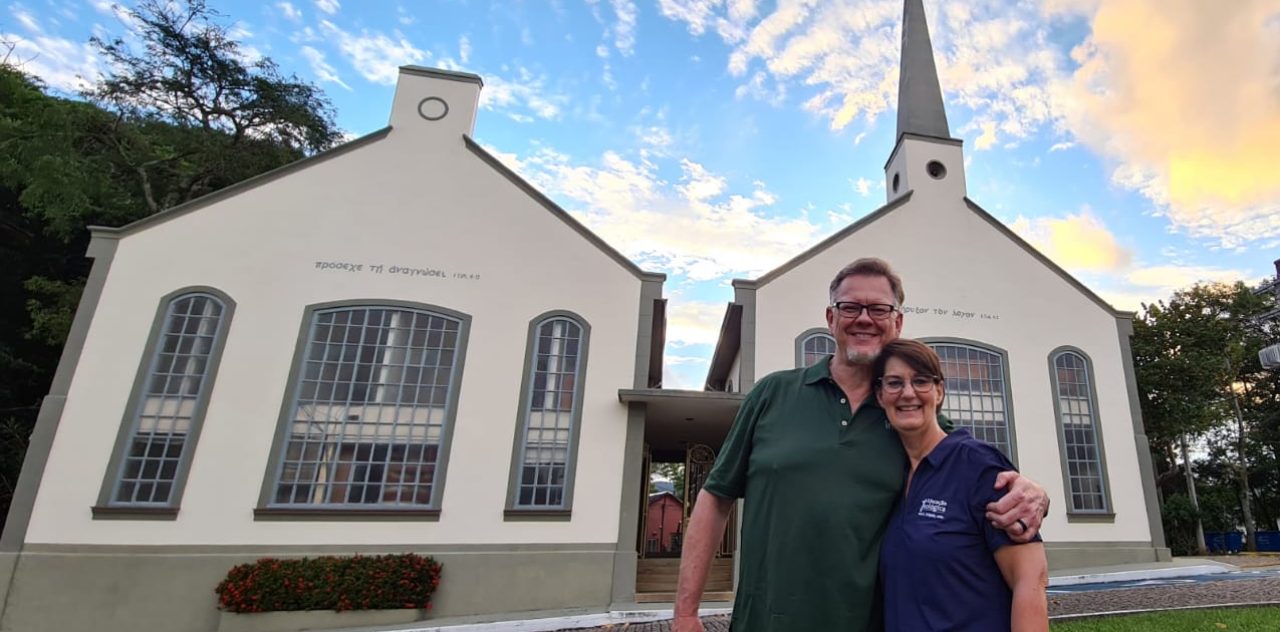
I recently returned home from a two-week teaching trip in Brazil’s Northeast. In a real sense for me, this was getting back to my “missionary roots.” Before moving to Brazil’s south fourteen years ago, Caron and I spent eight years ministering in Minas Gerais. Minas Gerais is a Texas-sized state located in Brazil’s Southeastern region. Much of the state of Minas Gerias is economically and logistically linked to the states of São Paulo and Rio de Janeiro, the two states that make up the southern and southeastern borders of Minas Gerais. This region of Minas Gerais is a land of mountains, mining, and great coffee. It has cool winters and warm summers, and is lovely beyond words and was “home” to us for the early part of our ministry.
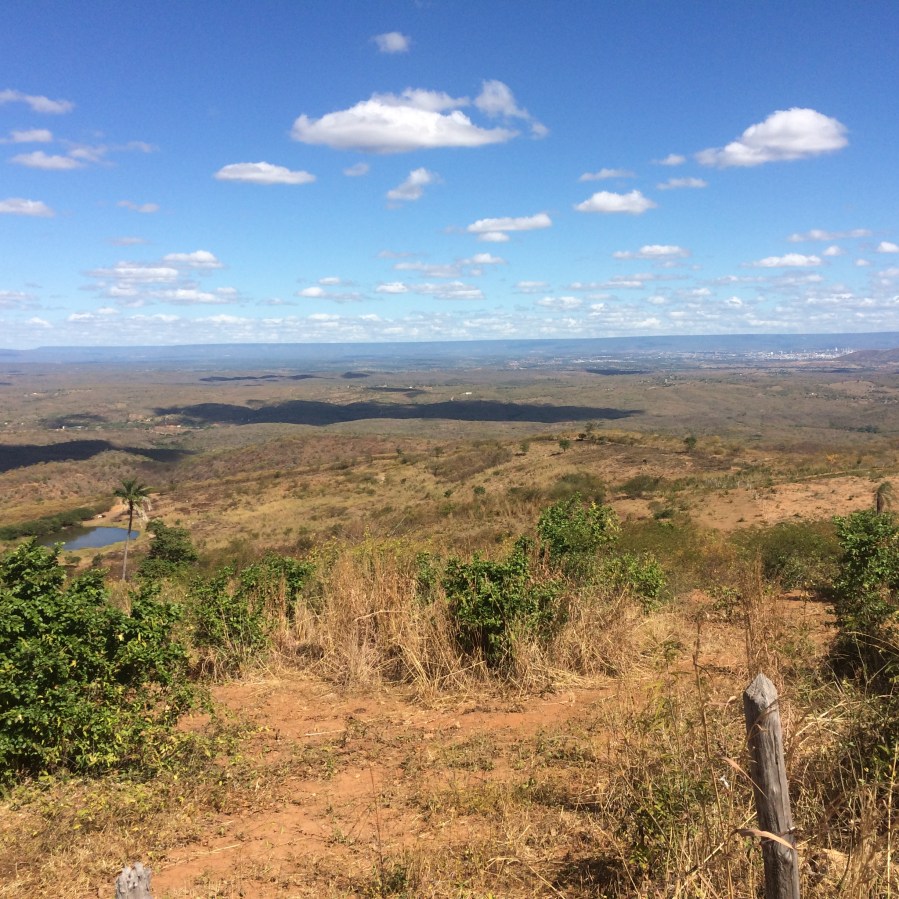
However, there is another part of Minas Gerais that is not the stuff of lovely post-card pictures. This other region has a beauty of its own, but it has a hard side as well. It can be hot, dry, and even survival is hard. This is Minas Gerais’ northeastern region known as the Valley of the Jequitinhonha. This is one of the poorest regions in Brazil and is the beginning of a vast semi-desert region known as the Sertão.
The Sertão stretches from northeastern Minas Gerais to the state of Ceará, where I was last week. It is a region whose rain patterns are directly affected by the Ocean currents popularly known as “El Niño” and “La Niña.” When ocean waters regularly warm in the Pacific, the “El Niño” effect, this directly impacts patterns of air circulation globally. Winds that would have come in from the Atlantic to bring rain to Brazil’s Sertão simply do not arrive. Hence, it is a region that experiences cyclical drought. As a result, farmers can lose an entire crop in any given year. If this occurs two years in a row, it can have disastrous consequences for those who live there.
I’d like to share with you the three things that God taught me while I was ministering in the Sertão recently:
Hard times need not necessarily make hard, harsh people.
As I have already said, Brazil’s Sertão is a hard region. It is not easy to live there. It is certainly not easy to farm there. It is not easy to stay there. The people who live in this region are tough and hardy. There is a saying among them that I will translate from Portuguese, “A Nordestino (Someone from the Sertão) is so tough that they can get milk to come out of a rock.” Dramatic rhetoric aside, it is true: The People of Brazil’s Northeast are tough and resilient. They have to be in order to live there.
Yet, they are kind souls. They are generous, warm and welcoming. A visitor to this region is greeted and received with the warmth extended to a long-time friend or family member. I could give you several examples. However, let me share with you an example that I still remember from our early days. Nearly 20 years ago I took my son, along with several other Brazilian Baptist friends, to the Valley of the Jequitinhonha. The weather was hot, the sun intense, and there was little or no water to be found. The suffering experienced by the people in that region was palpable. Yet, the warmth, generosity, and acceptance that I received remain lodged in my soul to this day. After several days staying with a family, the older matron of the family began to call my son, “o meu Galeginho” while simultaneously pinching his cheeks and kissing him. I could tell from the context that whatever it meant it was most likely good, but as a young missionary, I really wasn’t sure about the meaning. In my thickly accented Portuguese, I asked her, “What does that mean?” She responded saying, “You are a German (Portuguese = Alemão), i.e., a foreigner. He is a “Galego”, literally a Spaniard, i.e., a white person who is one of us.” Trust me, if there was anyone on the planet who did not look like one of them, it was my son, a tow-headed white-blond, fair-skinned boy, born in Kentucky. Yet, to her, he spoke Portuguese like one of them, so he was one of them. That gift of acceptance of my son as one of them is still a blessing that I treasure in my heart. It has kept me in Brazil. Accept my children and you accept me. Accept me, and it so much easier to stay.
This was a very poor family. There were holes in ceramic tile roof and you could look up at the stars while you slept at night on the floor. Yet, hard times did not make them bitter. Hard times made them better. On a different continent in a different day and time, my father was raised in the crushing poverty of the depression. Many times having meat for supper depended upon the sharp eyes of the shooter and his single .22 rifle shell. Thankfully, I never knew those types of hard circumstances first hand; my knowledge of those times came from my father’s stories. Yet, it was obvious that hard times did not make my father bitter. They made him grateful. He was a man whose life was characterized by a deep and abiding gratitude and joy. Whether it is a farmer living in Brazil’s Northeast today, an American being raised in the Great Depression, or any one of us today: Hard times need not make us bitter. By God’s grace, they can make us better. They can make us kinder, more compassionate, and more welcoming.

Spiritual challenges require apostolic passion and commitment.
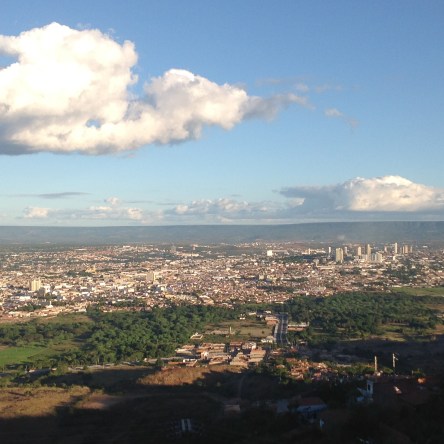
Brazil is without question one of the world’s most religious countries. Brazil is a religiously diverse nation; the majority would identify with some form of Orthodox Catholicism or Protestantism. However, Brazil is also a country deeply imbued with many types of non-Christian religions and heterodox forms of Christianity. One particular form of unique religious expression is the veneration of Padre Cícero, which is particularly strong in Brazil’s Northeast.
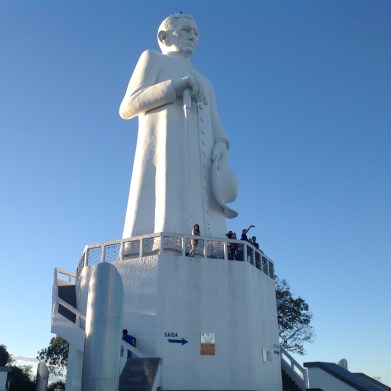
Padre Cícero is locally recognized in this region as a “popular” saint. He is believed to have miraculous powers, but the Roman Catholic Church does not officially recognize him. His following in Brazil’s Northeast rivals that of Marian veneration of Nossa Senhora de Guadelupe in Mexico or Nossa Senhora da Aparecida at the Bacílica da Aparecida in the state of São Paulo, Brazil. What makes this movement of particular interest is that Padre Cícero was excommunicated from the Roman Catholic Church near the end of his life, although he was reinstated posthumously last year into good standing. It’s hard to know exactly what Padre Cícero actually taught and/or believed during his lifetime. Certainly, many orthodox Roman Catholics during his lifetime considered him heterodox to the point of meriting excommunication. However, there is no doubt many today in Brazil’s Northeast look to him as a principal source of spiritual power, comfort, and consolation in their daily lives and struggles. In the midst of this cultural reality, profound, deep apostolic passion and conviction is needed on the part of those who would minster the Gospel in this region.
When I use the word “apostolic”, I am not using it in the primary sense of apostolic authority. In my theological and confessional tradition, primary apostolic authority is limited only to those who gave actual eyewitness testimony to Christ’s life and resurrection. Rather, I use the term in its secondary sense as one who has been sent on the “apostolic” mission of making Christ and His Gospel among those who still have not heard. To that end, when I think of apostolic passion, I think of my friend of many years, Pastor Washington Oliveira. I recently spent a week with him, and I was impressed once again with the importance of apostolic passion for Gospel ministry.
Pastor Washington was born in Brazil’s Northeast and has lived almost twenty years in the Sertão. His body, mind, and spirit is focused on one holy calling, making Christ’s Gospel known among the people who live in this region. Every conversation with him always works its way to the question, “How can the Gospel advance in the Sertão?” Every decision made by his local church passes through the same filter, “How will this local church’s decision contribute to church planting and evangelism in the Sertão, Brazil, and the world?” Most importantly, his prayer life is directed toward on-going intercession seeking God’s gracious blessings for the people of the Sertão. While with him, the prayer I most often heard was, “Lord, send forth more workers into your harvest.” With this type of passion, it is understandable how his church has been able to plant 15 churches in a region where previously there had been no Baptist work at all.
Wherever God might have you deployed in His mission, there are principles that can be learned from a servant like Pastor Washington:
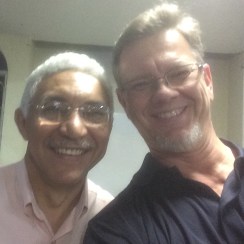
Longevity in a place of ministry often lays the foundation for success in ministry. Pastor Washington has given 19 years of his life to his region. When he speaks, he speaks with apostolic authority. His love, concern, and credibility are recognized. Longevity in a given location is no guarantee of inevitable success in ministry, but a lack of long-term presence and credibility is often linked to a lack of success in ministry.
Intentionality in public ministry priorities defines a ministry’s direction and inevitable results. Something in a person’s ministry will have first place in terms of time commitment, personal interest, emotional affection, and investment of resources. For success to be attained Great Commission advance has to be intentionally prioritized at every level: personally, ecclesiastically, and institutionally. There are many “good things” in which a person can invest time, efforts, and energies, all in the name of missions and ministries. Kingdom success comes to those who intentionally choose the best Great Commission advance from among the many “good things” of ministry.
Passionate personal piety focuses on mobilizing laborers for Gospel Harvest. One of the phrases, I heard Pastor Washington repeat on multiple occasions was, “I have wept and pleaded with God …” What has so grieved our hearts that leads us to say, “I have wept and plead with God?” There can be no greater cause to bring before the Father than the cause of the advance of the Gospel in the communities where we live, work, and minister. Perhaps the greatest need we can place before the Father is to send more laborers to advance His Kingdom’s work.
Hard places require a mobilized missionary presence.
There are many hard places in the world. Hardness may be due to political unrest, religious hostility, geographic isolation, or climactic challenges. Brazil’s Northeast is most widely known for its climactic challenges. No matter what the reason, hard places and spiritual “lostness” often go hand in hand. For the Gospel to reach these hard places, it requires God called servants to hear His call and say, “Yes, I will go.”
Those who go can and should be willing to do whatever is needed to advance the Gospel: things like evangelism, discipleship, social ministry, and training leadership. All of these ministries are needed in Brazil’s Northeast. In particular, I took part in a leadership training project via the catalyzing ministry of Reaching and Teaching, http://reachingandteaching.org in cooperation with the Brazilian Home Mission Board of the Brazilian Baptist Convention, a local Southern Baptist church, and the International Mission Board (IMB).
The IMB has a growing commitment to seeing limitless teams of Southern Baptists deploying to the nations. If you or your church are praying about your involvement in global missions, I would ask you to prayerfully consider Brazil’s Northeast. The needs are profound: spiritually, climatically, and economically. You and your church can make a real difference in the cause of Great Commission advance. One of the great needs is for more laborers in the Great Commission Harvest. There are many places in the world where we can and should go where God’s servants are not necessarily well received. That doesn’t reduce our missional responsibility to go there. Yet, the fact that you will be well received in Brazil’s northeast by warm and generous people, people who are open to a Gospel witness, does not detract from the fact that they too are lost without the hope of the Savior. In that sense, the spiritual reality of Brazil’s Northeast is not altogether different from other hard places. Yes, it does require some intentionality to get there. Yes, the climate can be challenging. However, if you or your church is looking for a first place to be involved in missionary ministry, I would commend this region to you. If interested, you can contact me or the International Mission Board for more details.
Let me conclude with these words translated from a popular evangelical song that expresses so well the message that I want to leave with you:
Whether in sandals or in flip-flops
Eating dust and dirt
On a donkey or a bicycle
Or on top of a truck
The feet of those who preach the Gospel how lovely they are.
It does matter what you drive
It doesn’t matter who is driving
The important thing is get there
And preach the Gospel
The feet of those who preach the Gospel how lovely they are.
In the Book of Acts
God gives the same orientation
Be my witnesses in any and every place
The feet of those who preach the Gospel how lovely they are.
The feet of those who preach the Gospel how lovely they are.Even if you don’t understand Portuguese, it is worth watching and listening to the song. https://www.letras.mus.br/grupo-sal-da-terra/de-sandalia-ou-de-alpercata/.
May you have the lovely feet of those that preach the Good News of Christ’s Gospel.
 Teaching Truth--Transforming Lives