
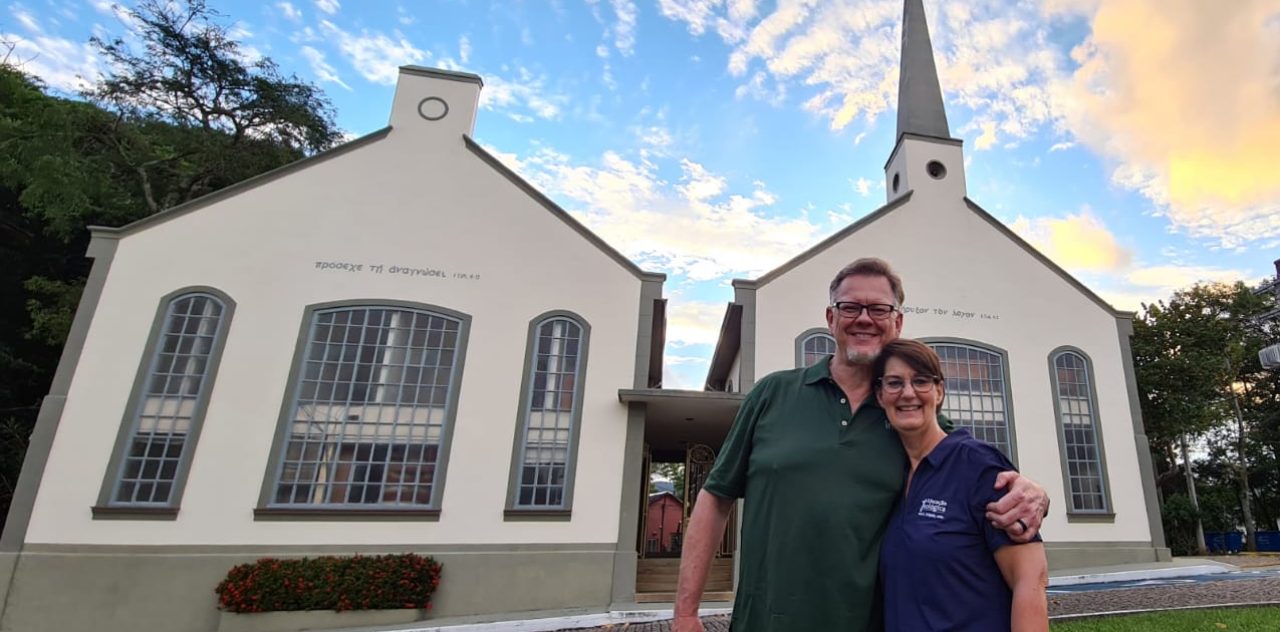
Returning to Brazil

Caron and I want to thank you all for praying for us. We return this week to Brazil to continue our ministry in that great mission. These past ten months in the United States have been challenging for us, and for many of our International Mission Board colleagues. We prayed and sought God’s will as to whether to accept the terms of the Voluntary Retirement Initiative being offered by our mission board, or to continue in our missionary ministry. There is no doubt that the Father desires us to return to Brazil and continue in His mission.

God has affirmed three truths in my heart that lead me into the future:

God’s mission calling for Mark and Caron Johnson has not changed.

A friend shared with me these words from Jeff Iorg, President of Golden Gate Baptist Theological Seminary. They have helped me as I navigated the challenges of the past year with respect to God’s will for my future:

“Your calling establishes parameters, giant brackets around your life, which informs your choices and directs the outcome of your life. A call can only be changed by a subsequent, superseding impression from God.[1]

Previously, I wrote as to how God marvelously and providentially moved us to the missions field. Based on these words of Dr. Iorg, I can say He has not in any way clearly said His plans for us have changed. We go back confident of His leading because we know what continues to burn in our hearts, a passion for His missions among the nations.

Kentucky Baptists, and Southern Baptists are still deeply committed to Great Commission advance in the world through the IMB.

My time in Kentucky has reminded me that Southern Baptists love missions and are still committed to God’s mission to the nations. This has not changed. Spending years outside the United States, I am at times amazed at the rapid rate of social change taking place in my own nation. However, one thing has not changed: Southern Baptists still love missions. Many of you have communicated this to us personally. We return with that knowledge. Dr. Iorg reminds us, “God calls through the prompting of others. [2]” I have felt encouragement and support from Southern Baptists during these challenging times. Challenging times still await us in the future. Yet, I find strength to continue in the encouragement that I have received. Like Aragorn in the Battle of Helm’s Deep, described in J. R. R. Tolkien’s “The Two Towers”, he received encouragement to stay from his friends: “Your friends are with you, Aragorn.” Knowing you stand with us makes all the difference between staying and going. We go because we go with the confidence of God’s presence and the support of God’s people.

My (Mark’s) personal mission has not changed: My mission continues to be to train the next generation of Great Commission servants for Global Missions deployment. 

After much prayer and soul searching, we reached we are confident of this: God would have us to continue in Brazil and the Americas until we have fulfilled our part in His mission.

After the soul-searching of 2015, I find Eric Liddell’s words in the movie, Chariots of Fire, to express my own deepest feelings: “I believe God made me for a purpose, but he also made me fast. And when I run I feel His pleasure.” I believe God has made each of us for a purpose. When we run the race He has set before us, we will feel His pleasure in what we do.

Yes, there will be tears when we return to Brazil this week. We cried when we thought of leaving Brazil; now, we cry some more thinking of leaving friends and family (especially 2 grandbabies!) in the USA. However, God has spoken to our hearts. God has called us. His churches support us. He has said, “Who will go for Us?” and we have said, “Here am I, send me.”

My passion is to see the biblical, Baptist, and missional theology of missionary pioneer Zachary Taylor embraced in every part of Brazilian Baptist life, and throughout the Americas. Working to this end is where I can make my greatest contribution to God’s mission in the Americas. Yet, this is not the ultimate vision. This (theological education and leadership training) is a means by which a greater vision can be attained.

I conclude with the words of Baptist missionary pioneer, William Buck Bagby a son of the great state of Texas whose parents came from Kentucky. Allow me first to quote him in the lovely Portuguese language:

“É o mais lindo panorama que os meus olhos jamais contemplaram. (…) Enquanto eu olho hoje à noite para o esplêndido panorama de luzes cintilando na superfície das águas, postadas ao lado das montanhas e se misturando com o brilho das estrelas, meu coração, se entristece por haver aqui milhares de pessoas que estão ‘sem Deus e sem esperança’, movimentando-se sob a triste sombra de um eclipse. Ó Deus, conceda que a tua verdade que está em Cristo Jesus encha esta terra, de Norte a Sul, do Atlântico aos Andes! ” — William Buck Bagby

“It (Brazil) is the loveliest panorama that my eyes have ever contemplated. While tonight as I look at the splendid panorama of lights reflecting on the water’s surface, placed by the side of mountains and mixed with the brilliance of the stars, my heart becomes saddened because in this great nation there are thousands and thousands “without God and without hope” walking as if under the dark cloud of a spiritual eclipse. Oh, God! Grant that your truth which is in Christ Jesus fill this land, from North to South, from the Atlantic to the Andes!”—William Buck Bagby.

Are we concerned? No more than normal. If God has called us, His churches support us, and our friends have not forgotten us, we are ready (to roughly paraphrase William Carey) “to go back down into the hole” because we know our family and friends, our churches, and our Southern Baptist family will continue to “hold the ropes”.

Yours for the Gospel and the Advance of the Great Commission,

Mark and Caron

[1] Iorg, J. (2013). Seasons of a leader’s life: learning, leading, and leaving a legacy. Nashville: B&H.
[2] Iorg, J. (2013). Seasons of a leader’s life: learning, leading, and leaving a legacy. Nashville: B&H.

Goodbyes and Great Commission Faithfulness

In English we say a picture is worth a thousand words. In the Portuguese language, there is a word worth a thousand pictures. “SAUDADES.”

sau·da·de [souˈdädə] (noun) a feeling of longing, melancholy, or nostalgia that is supposedly characteristic of the Portuguese or Brazilian temperament.

SAUDADE

A word in Portuguese and Galician (from which it entered Spanish) that claims no direct translation in English. It describes a deep emotional state of nostalgic or profound melancholic longing for an absent something or someone that one loves. Moreover, it often carries a repressed knowledge that the object of longing might never return. https://en.wikipedia.org/wiki/Saudade

We are in the final countdown month of preparations for our return to missionary service in Brazil. Many of you have asked how you can pray for us. Mark and Caron will both be sharing some thoughts on this poignant subject of leaving the land and people we love to return to the land and people we love. Here is the first of a two part series. Caron shared  s her reflections in Part 1 last week; Now, Mark shares his thoughts in Part 2.

Part 2 — Mark’s Thoughts

Hudson Taylor, at the end of a life full of suffering and trial, said, “I never made a sacrifice.”[1] In once sense, these words seem to be blatantly contradicted by the plain facts of Christian experience in general, and all forms of Christian missions service in particular. Hardships are endured on the part of God’s people when they are obedient to God’s mission, whether in sending or in going.

God’s mission has always gone forward on the “sacrifice” of God’s people. Minimally, that sacrifice consists of giving and sending. All Christians are called sacrificially to give of their financial resources for the advance of the Gospel. Some Christians individually will be called to give of their lives by actually deploying to other places and cultures in order to spread the Gospel.

However, at the same time, Christian missions is motivated by a deep sense of gratitude, gratitude for what God has done for humanity’s salvation in Christ Jesus. “Sacrifices” made in God’s mission pale in comparison to that which He has done on our behalf in order to procure for us salvation. Temporal “sacrifices” made in God’s mission pale in comparison to the eternal benefits that wait for us in God’s certain, coming Kingdom. His servants believe these truths, live for these truths, and willingly undergo personal hardships for the sake of these truths.

Is Christian missions a “sacrifice”?

In one sense, Hudson Taylor is right; deploying for the Great Commission is not a sacrifice. It is a privilege. No hardship experienced on our part equals the magnitude of the grace of God lavished upon us in Christ Jesus.

Yet, in another sense, the pain felt in Christian service is very real. The nature of missionary service is such that common human pain is often times amplified beyond normal experience by the additional challenges and stresses of trans-cultural living and cross-communication. As a result, the normal hardships of life, including the Christian life, are magnified in the rigors of transcultural living, ministry, and survival.

Missionaries deeply feel the pain of separation from kin and country that deploying for the Great Commission demands. This pain is real, and it can be very intense. This pain has been a constant companion in my missionary pilgrimage. For twenty-three years, I have lived with this reality of Great Commission obedience in my life, the pain of good-byes. Indeed, nothing has been more painful than the good-byes.

My first years of leaving family and friends to go to the mission field were accompanied by a deep sense of pain and loneliness.  Initially, leaving family and friends, I would cry like a baby. Sometime ago, I quit crying. Not because the pain of separation grew less, but not even tears could bring healing to the heart. For some sorts of pain, the hurt runs too deep to be casually cured.

  • Medicine can mask the pain.
  • Counsel can ease the pain.
  • Diversion helps to momentarily forget the pain.

However, as an American, I always felt the deeply held cultural assumption that I had to get through pain, get over pain, and/or move on from pain in order to be whole. After all, “the pursuit of happiness” is a part of the political and cultural legacy of what it means to be American. It was at that point that Christian missions itself taught me how to deal with, live with, and ultimately embrace that which I felt most deeply in my heart. Allow me to share another story from the life of Hudson Taylor that illustrates this important life lesson. The following passage is from The Growth of a Soul, vol 1. Written by Howard and Geraldine Taylor, son and daughter-in-law of Hudson Taylor.

My beloved, now sainted mother had come over … to see me off. Never shall I forget that day, nor how she went with me into the cabin that was to be my home for nearly six long months. With a mother’s loving hand she smoothed the little bed. She sat by my side and joined in the last hymn we should sing together before parting, we knelt down and she prayed – the last mother’s prayer I was to hear before leaving for China. Then notice was given that we must separate, and we had to say good-bye, never expecting to meet on earth again.

For my sake she restrained her feelings as much as possible. We parted, and she went ashore giving me her blessing, I stood alone on deck, and she followed the ship as we moved toward the dock-gates, As we passed through the gates and the separation really commenced, never shall I forget the cry of anguish wrung from that mother’s heart. It went through me like a knife, I never knew so fully, until then, what ‘God so loved the world’ meant. And I am quite sure my precious mother learned more of the love of God for the perishing in that one hour than in all her life before.

 Oh how it must grieve the heart of God when He sees His children indifferent to the needs of that wide world for which His beloved, His only Son suffered and died. 

Hudson said: “I never knew so fully, until then, what ‘God so loved the world’ meant.” These key words from have helped me walk through the pain of separation from family and loved ones.

Simple though it may be, it came as a revelation to my spirit that it was “Ok” to be deeply grieved with saying good-bye.

How could it be anything else but terribly painful to leave those that we love? It was “Ok” to be saddened to leave behind aging parents for whom I longed to care, precious family for whom I longed to be near, and long-time friends with whom I desired to share life. It was not necessary for me to “get over and move beyond” anything that I felt, because the pain I felt was real.

Painful, sacrificial love is the essence of the very faith that God’s people have been sent to proclaim to the nations.

The pain of separation was part and parcel of Christ’s incarnation and ultimately His atoning work on our behalf.

  • Salvation cost the Father loss of fellowship with His Son as He became a propitiation, a sin offering on our behalf.
  • Salvation cost the Son communion with His Father, which He had enjoyed for all eternity, when He took unto Himself the wrath for which humanity’s sin deserved.
  • His cry of dereliction, abandonment, and separation was the price paid for sinner’s salvation.

It comes as no surprise that those who follow in the footsteps of the Savior must be willing as well to walk in the same way of suffering and separation as He walked. As we go to the nations, we go as messengers of a costly sacrificial love. It is no small wonder that we too must bear the marks in our spirits, and at times our bodies, of this same sacrificial love for others that is necessary to make Christ known among All Peoples in All Places.

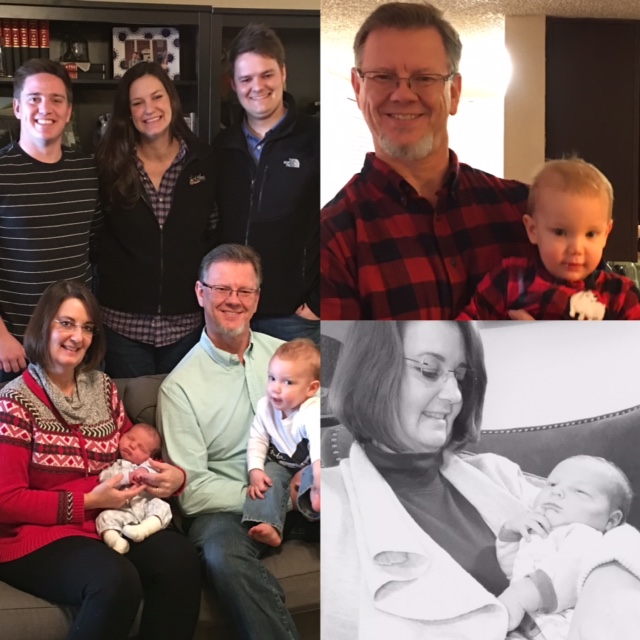
Caron and I have known the pain of leaving fathers who have now gone on to be with Jesus, mothers who are now aging, precious family members whose relationships are treasured, and now two grandsons. All of these have been painful. Particularly, it is now leaving the two grandsons that brings with it a type of pain heretofore not experienced in my life. I deeply grieve leaving them, because I so deeply want to invest in them, to love them, to see them become the men God would have them to be.

Only one love motivates me to continue in what is indeed a painful mission, God’s eternal love for the lost.

He has lost sheep in All Places among All Peoples whom He desires to call to Himself. These come from every tribe, tongue, and nation. Embracing God’s love for lost souls and His costly mission to redeem them, I can embrace the pain of leaving and separation. I can embrace the pain of good-byes.

When the pain of the mission is embraced, the feeling left in the human heart is “saudades,” the genuine heart-longings that one feels for the people and places we most treasure. I can live with this pain because it is an integral part of a mission bigger than the pain that I feel. For the day will come when these words of Christ words will become true: “And if I go and prepare a place for you, I will come again, and receive you to myself; that where I am, there you may be also.” (John 14:3 NASB).

What will we feel when this Day finally comes to pass? In this life, we embrace the pain of Great Commission faithfulness and live with the sweet “saudades” that God’s Spirit leaves in the heart. The Day is coming when all hearts in Christ will find the eternal joy for which their hearts long. Words from J. R. R. Tolkien express the future for which all God’s saints yearn:

“Gandalf! I thought you were dead! But then I thought I was dead myself. Is everything sad going to come untrue? What’s happened to the world?”

“A great Shadow has departed,” said Gandalf, and then he laughed and the sound was like music, or like water in a parched land; and as he listened the thought came to Sam that he had not heard laughter, the pure sound of merriment, for days upon days without count.

For now, we embrace pain in God’s mission to the nations, but the day is coming when everything sad is going to come untrue.

It is for this we labor. It is for this we long. It is for this we eagerly await. What does it mean to have “saudades?” For me, it means making peace with my pain for sake of the Prince of Peace.

[1] Piper, J. (2002). Brothers, we are not professionals: a plea to pastors for radical ministry (p. 52). Nashville, TN: Broadman & Holman Publishers.

Saudades

In English we say a picture is worth a thousand words. In the Portuguese language, there is a word worth a thousand pictures. “SAUDADES.”

sau·da·de [souˈdädə] (noun) a feeling of longing, melancholy, or nostalgia that is supposedly characteristic of the Portuguese or Brazilian temperament.

SAUDADE

A word in Portuguese and Galician (from which it entered Spanish) that claims no direct translation in English. It describes a deep emotional state of nostalgic or profound melancholic longing for an absent something or someone that one loves. Moreover, it often carries a repressed knowledge that the object of longing might never return. https://en.wikipedia.org/wiki/Saudade

We are in the final countdown month of preparations for our return to missionary service in Brazil. Many of you have asked how you can pray for us. Mark and Caron will both be sharing some thoughts on this poignant subject of leaving the land and people we love to return to the land and people we love. Here is the first of a two part series. Caron will share her reflections in Part 1; Mark will share his thoughts in Part 2.

Part 1 — Caron’s Reflections

As a mother, I well remember awaiting the birth of our second child and wondering how I could ever love another with the same kind of love I held for our firstborn. It took about .025 seconds for me to resolve that after his birth! I was amazed that my heart could make room for another to occupy the same level of intense love. Yet, that is exactly how I describe the situation I now find myself in.

I am a person who loves, feels at home at, and deeply misses when not present, two distinct countries, two different peoples, two different cultures. As we prepare to return to Brazil, people ask me, “Where do you consider home now?” My response: Both. And neither.

Allow me to explain:                                                                                                        Neither, because I will always be an “outsider”.

  • In Brazil, I speak Portuguese, have Brazilian friends, observe Brazilian customs and holidays, but I am still American. I enjoy celebrating American holidays, making American recipes (especially desserts!) and my Portuguese has a distinct American accent, no matter how hard I try. I am an “accepted outsider”, but an outsider, nonetheless. I belong, but I am different.
  • In the USA I find that here too, I am a bit of an outsider. It is the land of my birth, the home of my ancestors for several generations now. Yet, I find that after living abroad for 23 years, I am a foreigner to many of the customs, slang expressions, jokes, references to TV shows, understanding certain processes (pumping gas, automated Rx refills, to name a few). I crave different foods. I enjoy hanging out with internationals. I speak English without a foreign accent, but it doesn’t take long for folks to realize that I’m just a bit different. Thankfully, here too family and friends receive me as an “accepted outsider”.   I belong, but I am different.

Both, because I am “at home” both in Brazil and in the USA.

  • When in the USA, I embrace whole-heartedly the culture, the people, the seemingly unlimited variety of options of everything to purchase for a reasonable price. I spend every possible moment out in the backyard: gardening, grilling out, and sitting around the fire pit. I enjoy watching the squirrels play and the hearing the birds sing (things I don’t get to do from my 10th story apartment in Brazil.) Most of all I enjoy spending time with friends and family. I enjoy meeting friends for lunch or coffee. I enjoy Wednesday night suppers at church. I enjoy singing in the Christmas Cantata. I enjoy every moment I spend with my precious family. I cherish every diaper I changed, every bath given, every story read to my two grandsons and I cherish the special moments I have spent with their parents (our daughter and son-in-law). I cherish every road trip taken with our son, every song sung together and Trivial Pursuit game played (even though I never win). I value every hour spent in the waiting room of a doctors office with my mom, or trip to the grocery together; every visit with my mother-in-law around the dinner table at the assisted living residence. I find myself purposefully, intentionally, recording these memories (sights, sounds, smells, etc.) on the hard-drive of my brain so I can recall them at a later date and relive them. Yes, I’ll confess here, that is why I take so many pictures and post them at random times. I am reliving those special moments because I know that those moments will never return. Now, I am not saying that the same is not true for you, dear reader. But might I suggest that unless you think about the fact that you won’t have that opportunity again for a very long time (possibly never), you many not fully appreciate how precious it is to experience it now.

Saudade was once described as “the love that remains” after someone is gone. Saudade is the recollection of feelings, experiences, places or events that once brought excitement, pleasure, well-being, which now triggers the senses and makes one live again. It can be described as an emptiness, like someone (e.g., one’s children, parents, sibling, grandparents, friends, pets) or something (e.g., places, things one used to do in childhood, or other activities performed in the past) that should be there in a particular moment is missing, and the individual feels this absence. It brings sad and happy feelings all together, sadness for missing and happiness for having experienced the feeling. https://en.wikipedia.org/wiki/Saudade

Yes, the USA is my home. I love it here. I don’t want to leave. (There, I said it.)

  • Yet, I am ready to go “home” to Brazil. I miss my bed. I miss my kitchen. I miss my pictures. I miss my orchids. I miss my “stuff”. I miss my friends, bike rides, walks along the beaches, and churrascos (Brazilian cook outs). I don’t miss the urban traffic, but I do miss certain aspects of the city. Most of all, I miss what I do there.

I’m a teacher by trade. I have taught every age and every grade from preschool – high school at some point. I have taught English as a Second Language (ESL). I have taught cooking and sewing and needlework classes. I have taught in churches and in seminaries. God has used my abilities to teach to create within me a passion for discipleship. I love teaching new believers how to take their first steps in following Christ. I love helping folks understand the glorious mysteries of the Gospel. I get excited about explaining how the Bible is relevant to all of life to those friends who are “not-yet” believers. I am honored to have the privilege of teaching young couples what it is to have a marriage centered on Christ and to teach principles of godly parenting to first generation Christians. I am blessed beyond measure to practice hospitality and open our home for Bible studies and times of sweet fellowship. (Even when sometimes it feels like we are running a Bed and Breakfast!) I still teach, but at a much different level now. God has uniquely made me who I am (with my interests, talents and abilities) so that I can become who He wants me to be. I’m not saying that can only happen in Brazil.  But I am saying that is where God has placed me.

In a word, it is the “call” of God that empowers me to say goodbye to the life I love here in the USA and go embrace the life He has enabled me to love in Brazil. Many of you know we were offered the opportunity to for an early retirement package from our mission sending agency (IMB). After much prayer and soul searching, we decided not to accept it. Many of our dear friends and missionary colleagues chose to accept it. They too did so after much soul searching and prayer. It is not an easy decision to stay on the field or to return to the USA. Those of you involved in ministry know that decisions of this nature are not defined by financial loss or gain, but rather the sense of “call” on one’s life at that particular moment. I grieve for the loss of dear missionary friends and colleagues. I will miss them. I will add them to the list of my “saudades”. I can say with confidence though, that at this point in time, our call to “go and make disciples” is still what it was 23 years ago. The Lord has not yet released us from that call in Brazil.

Will you pray for us as we leave home to go home?

Saudades!                                                                                                                                  Caron